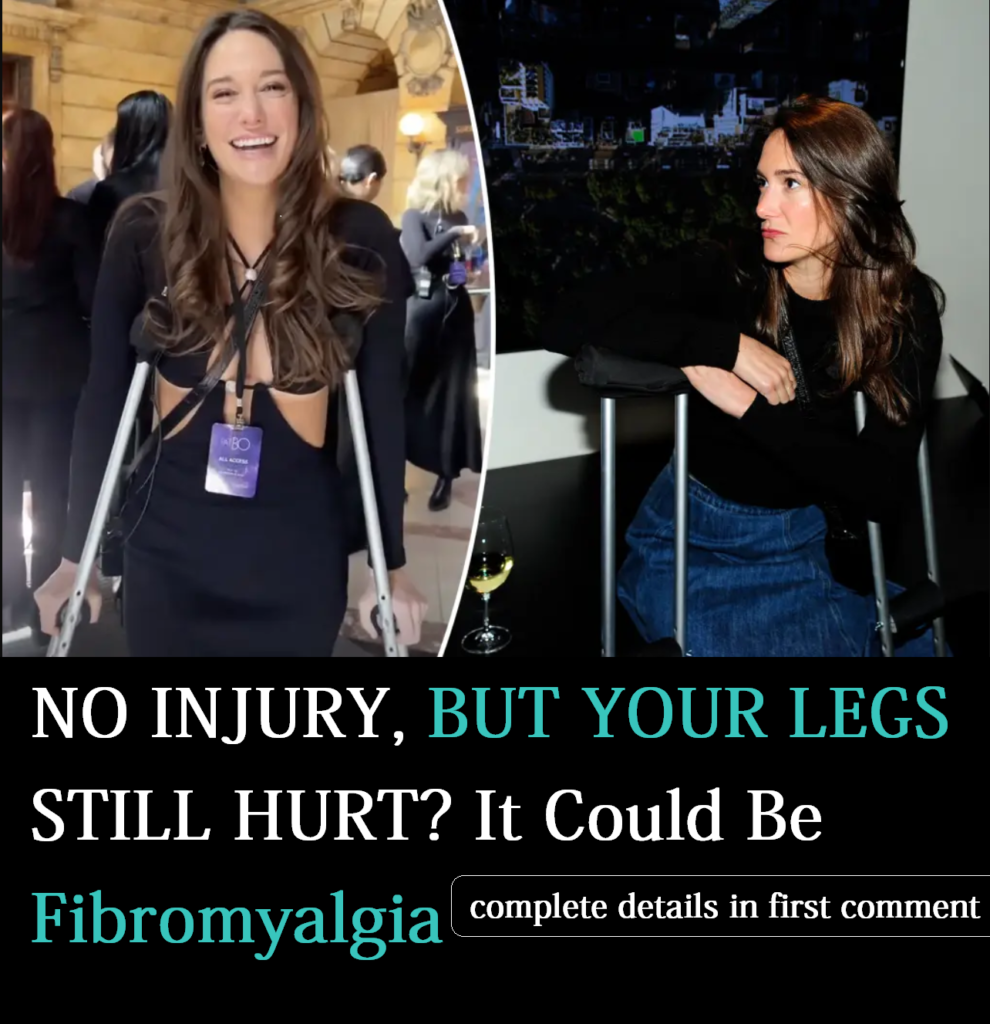
Fibromyalgia is a chronic condition characterized by widespread pain, intense fatigue, sleep disturbances, and cognitive difficulties. Because its symptoms are often invisible, many people struggle to understand the impact the condition can have on daily life. Although no comparison can fully capture the experience, these descriptions help illustrate how many patients describe the pain and exhaustion caused by fibromyalgia.
- Like being covered in barbed wire that digs into your skin with every movement.
- Like having a severe flu every day, without ever fully recovering.
- Like having all your muscles covered in bruises after an intense workout you never did.
- Like carrying a backpack filled with rocks everywhere you go.
- Like having a sunburn underneath your skin that even your clothes can irritate.
- Like your body’s pain alarm is stuck at maximum volume.
- Like walking through wet cement while everyone around you moves normally.
- Like experiencing tiny electric shocks traveling through your muscles and nerves.
- Like trying to function after going 48 hours straight without sleep.
- Like feeling a deep, aching pain in your bones, even while resting.
- Like having a constant toothache throughout your entire body.
- Like every muscle is tense, sore, and exhausted all at the same time.
- Like your skin is covered with invisible bruises that hurt at the slightest touch.
- Like trying to think through a thick fog that makes concentration almost impossible.
- Like your body’s battery never goes above 20%, no matter how much you sleep.
- Like fighting an invisible battle every day while appearing perfectly fine on the outside.
Conclusion
Everyone with fibromyalgia experiences the condition differently. Some descriptions may perfectly reflect one person’s experience, while others may not feel the same for someone else. What matters most is recognizing that the pain, fatigue, and limitations are real, even when they cannot be seen. Understanding, empathy, and access to appropriate treatment can make a meaningful difference in the quality of life of those living with this invisible condition.
ways people might describe what fibromyalgia feels like.
1. Like Being Wrapped in Barbed Wire
Imagine having an invisible layer of barbed wire wrapped around your body.
Every movement seems to remind you that it is there.
Getting out of bed, turning around, climbing stairs, reaching for something, or even changing position can sometimes feel uncomfortable or painful. The sensation may not always be sharp. For some people, it is more like persistent soreness or sensitivity that makes ordinary movement feel much harder.
This comparison helps explain why fibromyalgia pain can affect everyday activities that healthy people normally perform without thinking.
2. Like Having the Flu That Never Completely Goes Away
Another common way to describe fibromyalgia is feeling as though you have a severe flu—but without ever reaching the point of full recovery.
There may be body aches, exhaustion, poor sleep, headaches, weakness, and an overall feeling of being unwell.
The difficult part is that there may be no obvious infection causing the symptoms.
One day might be manageable, while another can feel overwhelming. During a fibromyalgia flare, symptoms may become significantly more difficult to handle.
This constant uncertainty can be emotionally exhausting as well as physically demanding.
3. Like Having Bruises All Over Your Body
Imagine waking up after an intense workout you never actually performed.
Your muscles feel sore. Your body feels tender. Even simple movements may seem like they require more effort than they should.
Some people with fibromyalgia describe their bodies as feeling bruised even when there are no visible bruises.
This can make physical contact uncomfortable. A hug, massage, tight clothing, or pressure from a mattress may feel very different from how it would feel to someone without heightened pain sensitivity.
4. Like Carrying a Backpack Full of Rocks
Think about carrying a heavy backpack everywhere you go.
Now imagine that you cannot take it off.
You carry it while walking through the house, working, shopping, preparing food, talking with friends, or simply sitting at your desk.
That is one way to understand fibromyalgia fatigue.
The fatigue associated with fibromyalgia can make normal tasks feel disproportionately difficult. Something as ordinary as taking a shower or preparing breakfast may require planning when energy is limited.
The challenge is not always motivation. Sometimes the body simply feels as though it has very little energy available.
5. Like Having a Sunburn Underneath Your Skin
Fibromyalgia can sometimes involve increased sensitivity to touch.
Imagine having a sunburn and then putting clothing over it.
Even gentle pressure can feel irritating.
Some people with fibromyalgia experience a similar type of sensitivity without having an actual burn. Certain fabrics, temperatures, physical contact, or pressure may become uncomfortable.
This is one reason the phrase “But you don’t look sick” can be particularly frustrating for someone living with an invisible condition.
The absence of visible damage does not mean the sensation is imaginary.
6. Like Your Pain Alarm Is Stuck on Maximum Volume
One useful way to understand fibromyalgia is to imagine that the body’s pain-processing system has become excessively sensitive.
Normally, the nervous system helps the brain determine whether a sensation represents danger or injury.
With fibromyalgia, pain processing is altered, and the nervous system may respond unusually strongly to sensations that might not be painful for someone else.
Imagine a smoke alarm that becomes extremely sensitive.
A small amount of smoke might produce an alarm that sounds much louder than expected.
This analogy is not a complete explanation of fibromyalgia, but it can help explain why the intensity of pain does not always correspond to visible tissue damage.
7. Like Walking Through Wet Cement
Imagine trying to walk through wet cement while everyone around you is walking normally.
Every step takes more effort.
Your body feels heavy. Your muscles seem reluctant to cooperate. Tasks that used to happen automatically require concentration and determination.
This is a powerful description of how chronic fatigue and widespread pain can affect physical functioning.
Someone may still go to work, take care of children, prepare meals, or handle household responsibilities. But doing those things may require significantly more energy than other people realize.
That hidden effort can become exhausting over time.
8. Like Tiny Electric Shocks Moving Through Your Body
Not all fibromyalgia sensations are described as dull or aching.
Some people report sensations that feel like tingling, burning, pins and needles, or brief electric shocks.
Imagine tiny electrical pulses moving through different areas of your body without warning.
One moment the sensation may be in an arm. Later, it may appear in a leg, shoulder, back, or another area.
These sensations can be confusing, especially when they appear without an obvious injury.
Because symptoms can move or change, people may struggle to explain exactly what they are experiencing.
9. Like Functioning After 48 Hours Without Sleep
Now imagine trying to complete an ordinary day after being awake for two days.
Your concentration is poor.
Your reactions feel slower.
Your patience is shorter.
Your body feels exhausted.
Even simple decisions can become surprisingly difficult.
For some people with fibromyalgia, persistent sleep problems contribute to a similar experience.
Sleep is supposed to help the body recover, but sleep disturbances can leave a person feeling unrefreshed. Fatigue and poor sleep may then make pain and concentration problems even harder to manage.
This can create a frustrating cycle: pain interferes with sleep, poor sleep contributes to fatigue, and fatigue can make coping with pain more difficult.
10. Like a Deep Ache That Reaches Into Your Bones
Some people describe fibromyalgia as a deep, heavy ache that seems to come from inside the body.
It may feel as though the discomfort is deeper than the muscles.
The person may be resting on a couch or lying in bed and still experience significant pain.
This is important because fibromyalgia pain is not necessarily something that disappears simply because someone stops moving.
Rest can be necessary, but it does not always provide immediate relief.
11. Like Having a Toothache Throughout Your Body
A toothache is difficult to ignore.
Even when it is not unbearable, it can remain in the background and continually demand attention.
Now imagine experiencing that type of persistent discomfort across multiple parts of your body.
For some people, this comparison captures the relentless nature of fibromyalgia pain.
The pain may fluctuate throughout the day, but even when it becomes quieter, the person may still be aware of it.
Living with ongoing discomfort can also consume mental energy.
12. Like Every Muscle Is Tense, Sore, and Exhausted
Another description is the feeling that the entire body has been pushed too far.
The muscles feel tight.
The body feels sore.
Energy feels depleted.
At the same time, there may be an urge to stretch or change position because remaining still is uncomfortable.
This combination can make it difficult to find a comfortable position, particularly at night.
When sleep is already disrupted, nighttime discomfort can become especially frustrating.
13. Like Having Invisible Bruises
Imagine having bruises everywhere—but nobody can see them.
Someone may touch your shoulder and expect the contact to feel comforting.
Instead, it may feel uncomfortable.
Someone may pat your back, give you a hug, or squeeze your hand without realizing that the pressure is unpleasant.
This is one of the hardest aspects of an invisible illness.
Other people naturally judge what they can see. If there is no swelling, cast, wound, or visible injury, they may assume the person is fine.
But fibromyalgia symptoms cannot always be measured by appearance.
14. Like Trying to Think Through a Thick Fog
Physical pain is not the only challenge.
Many people with fibromyalgia report problems with concentration, memory, mental clarity, or processing information. This experience is commonly called fibro fog.
Imagine trying to think while your brain is surrounded by thick fog.
You know what you want to say, but finding the right word takes longer.
You walk into a room and forget why you went there.
You read the same sentence twice.
You struggle to concentrate during a conversation.
You may remember something later but be unable to retrieve it when you need it.
These experiences can be embarrassing, particularly for people who were previously highly organized or mentally active.
15. Like Your Body’s Battery Never Charges Above 20%
Think about your phone battery.
You plug it in overnight and expect to wake up with a full charge.
Now imagine waking up and seeing that the battery is still at 20%.
You go through the day carefully trying to conserve power.
That is one way to visualize fibromyalgia fatigue.
The person may need to decide which activities are truly necessary because energy is limited.
A busy morning might mean there is very little energy left in the afternoon.
A social event might require extra rest afterward.
Even activities that are enjoyable can have a physical cost.
This is why pacing and balancing activity with rest can be important parts of managing daily life.
16. Like Fighting an Invisible Battle Every Day
One of the most emotionally difficult parts of fibromyalgia is that other people may not understand what is happening.
A person may smile, go to work, attend a family gathering, or post a normal-looking picture online.
From the outside, everything appears fine.
Inside, they may be dealing with pain, fatigue, poor sleep, brain fog, and an exhausting effort to continue with normal responsibilities.
This can create a painful disconnect between appearance and reality.
Someone might hear:
“You look great.”
“You don’t seem sick.”
“You were fine yesterday.”
But chronic conditions do not necessarily behave consistently.
A person can look healthy while struggling significantly.
17. Like Having to Plan Your Life Around Your Energy
Perhaps one of the most realistic descriptions of fibromyalgia is that everyday life can become a matter of energy management.
Before fibromyalgia, a person might simply make plans.
After symptoms become persistent, they may start thinking:
“How much walking will there be?”
“Will I be able to rest afterward?”
“What happens if I wake up in pain?”
“Do I have enough energy to do both activities?”
“What if I have a flare tomorrow?”
This constant calculation can become mentally tiring.
It may also change how someone approaches work, family responsibilities, exercise, travel, social activities, and household chores.
Why Fibromyalgia Can Be Difficult for Other People to Understand
Fibromyalgia is often called an invisible illness because many of its most disruptive symptoms cannot be easily seen.
There may be no obvious physical sign showing how much pain someone is experiencing.
That creates a communication problem.
If someone has a broken leg, people immediately understand why they cannot walk normally. If someone has a visible injury, others can see that something is wrong.
Fibromyalgia is different.
A person may be sitting at a desk while experiencing widespread pain.
They may be laughing with friends while feeling exhausted.
They may complete a household task and then need significant rest.
They may appear energetic for a short period and experience worse symptoms later.
This does not mean the condition is inconsistent or imaginary. Fibromyalgia symptoms can fluctuate, and the severity experienced by one person may differ considerably from another.
How Fibromyalgia Symptoms Can Affect Daily Life
The impact of fibromyalgia often extends beyond pain.
Persistent symptoms can interfere with work, relationships, exercise, household responsibilities, sleep, concentration, and social activities.
A person who used to complete several tasks in an afternoon may need to spread those tasks across multiple days.
Someone who enjoyed exercise may have to change the intensity or type of activity.
Someone who regularly socialized may occasionally cancel plans because symptoms have become overwhelming.
These changes can be frustrating and sometimes emotionally difficult.
Treatment and self-management generally focus on improving symptoms and quality of life rather than expecting one treatment to eliminate every symptom. According to the National Institute of Arthritis and Musculoskeletal and Skin Diseases, management may involve a combination of approaches such as physical activity, behavioral therapies, medications, and self-management strategies.
Can Fibromyalgia Pain Get Better?
Fibromyalgia is a chronic condition, and there is currently no single cure that eliminates it for everyone.
However, that does not mean a person is destined to feel exactly the same forever.
Symptoms can change over time, and treatment plans can be adjusted according to an individual’s needs.
Healthcare professionals may recommend approaches aimed at improving pain, sleep, physical function, fatigue, and coping strategies.
Gentle and appropriately paced physical activity may be useful for some people. NIAMS notes that low-impact activities such as walking, swimming, water exercise, yoga, and tai chi can be incorporated gradually, with medical guidance when appropriate.
Sleep habits can also matter. Maintaining a consistent sleep schedule, creating a comfortable sleep environment, and avoiding habits that interfere with sleep may help some people manage fatigue.
Because symptoms can overlap with other medical conditions, people experiencing persistent widespread pain, severe fatigue, sleep problems, or cognitive difficulties should speak with a qualified healthcare professional rather than assuming every symptom is caused by fibromyalgia.
The Most Important Thing to Remember About Fibromyalgia
Perhaps the most important message is simple:
Fibromyalgia does not look the same for everyone.
One person may primarily struggle with widespread pain.
Another may find fatigue to be the most disabling symptom.
Someone else may struggle more with sleep, sensitivity, headaches, or brain fog.
There can also be good days and difficult days.
A person may accomplish something one day and be unable to repeat it the next. That does not necessarily mean they are exaggerating their symptoms or refusing to try.
Chronic illness often requires adapting to changing physical limits.
Understanding this can make a significant difference.
Instead of asking someone with fibromyalgia why they cannot simply “push through,” it may be more helpful to ask what support they need.
Instead of judging someone by how they look, consider what they may be experiencing when nobody else can see it.
Conclusion: What Does Fibromyalgia Feel Like?
So, what does fibromyalgia feel like?
For some people, it can feel like having bruises covering the body, carrying a heavy backpack all day, walking through wet cement, or trying to function with almost no energy.
For others, it may feel like burning, aching, tenderness, tingling, mental fog, poor sleep, or a combination of several symptoms at once.
There is no single metaphor that perfectly describes fibromyalgia.
The condition can affect people differently, and symptoms may change from one day to another. What remains important is recognizing that the experience can be very real even when there is nothing obvious to see.
Fibromyalgia is more than “just being tired” or “having aches.”
It can affect how a person moves, sleeps, thinks, works, socializes, and manages everyday responsibilities.
Understanding that reality is an important first step toward empathy.
If you or someone you know is experiencing persistent widespread pain, severe fatigue, sleep problems, or cognitive difficulties, talking with a healthcare professional can help determine what may be causing the symptoms and what treatment or management options may be appropriate.
The person sitting next to you may look completely healthy.
They may even smile.
But sometimes, behind that smile, they are carrying a burden that nobody else can see.