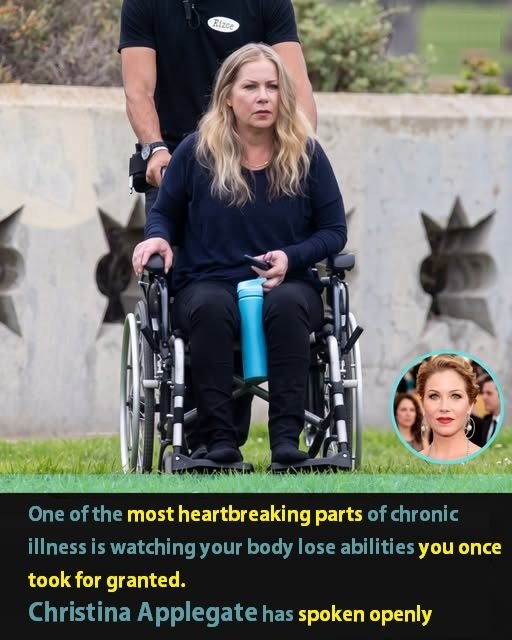
One of the most heartbreaking parts of chronic illness is watching your body lose abilities you once took for granted. Christina Applegate has spoken openly about how multiple sclerosis changed her strength, mobility, and independence, including the everyday things she can no longer do the way she once could. Her experience is with MS, not fibromyalgia, but that grief can resonate deeply with anyone whose chronic illness has changed their physical abilities.
When your body changes, you may grieve things other people never realize you have lost. Running, dancing, driving, exercising, holding something without pain, standing for long periods, or simply getting through a normal day can become difficult. What looks like a small limitation from the outside can represent a huge loss of freedom on the inside.
Fibromyalgia can also affect physical functioning through widespread pain, fatigue, stiffness, tenderness, and heightened sensitivity. Some people may find that during severe flares, ordinary activities require far more effort than they used to, while others experience significant limitations even outside a flare. Being able to do something occasionally does not mean your body can reliably do it every day.
And there can be so much grief in that change. You may miss the person who could make spontaneous plans, stay active without calculating the consequences, or move through the day without thinking about pain. You can be grateful for what you still have while simultaneously grieving what chronic illness has taken away.
But your worth was never measured by how fast you could run, how much you could lift, how far you could walk, or how much you could accomplish in a day. Your body may have changed, but you are still the same person deserving of love, dignity, support, and compassion.
Chronic illness can take abilities away without taking away your value.
When Chronic Illness Changes What Your Body Can Do: Understanding the Grief Behind Lost Abilities
Living with a chronic illness can change much more than the way a person feels physically. It can change routines, relationships, independence, confidence, and even the way someone imagines their future.
One of the most difficult parts can be realizing that your body no longer does certain things as easily as it once did.
Maybe you used to take a long walk without thinking about it. Perhaps you could dance, exercise, drive for hours, carry groceries, stand through an entire event, or make spontaneous plans with friends. Then chronic illness entered the picture, and activities that once felt automatic began requiring planning, rest, or sometimes became impossible altogether.
This kind of change can create a form of grief that is difficult to explain to other people.
The experience of actress Christina Applegate is one example that has brought attention to this reality. Applegate has spoken publicly about living with multiple sclerosis (MS) and how the condition has affected her mobility, strength, and independence. Her experience is with multiple sclerosis, not fibromyalgia, but the emotions surrounding physical limitations can resonate with people living with many different chronic conditions.
Fibromyalgia, in particular, can affect how a person moves through everyday life. Widespread pain, fatigue, stiffness, tenderness, sleep problems, and increased sensitivity can make ordinary tasks feel surprisingly demanding.
The important thing to remember is that losing abilities—or temporarily losing access to them—does not mean losing your worth.
The Emotional Impact of Losing Physical Abilities
Chronic illness is often discussed in terms of symptoms. Doctors may ask about pain levels, fatigue, sleep, mobility, or other physical changes.
But there is another side that can be harder to measure: the emotional impact of losing parts of your former life.
Imagine being someone who once loved running but now struggles to walk around the neighborhood. Or someone who enjoyed dancing but can no longer stay on their feet for very long. Maybe you used to exercise several times a week and now need days of recovery after even modest physical activity.
Those changes can feel deeply personal.
You may find yourself thinking:
- “Why can’t I do this anymore?”
- “Will I ever feel like myself again?”
- “Why does everything require so much effort?”
- “Other people don’t seem to understand how difficult this is.”
- “I miss the person I used to be.”
These feelings don’t mean you are ungrateful.
You can appreciate the things your body is still able to do while grieving the things that have become difficult or unavailable.
Both emotions can exist at the same time.
Invisible Losses Can Be Just as Real
Some losses are obvious. If someone uses a mobility aid, other people may recognize that they are dealing with a physical challenge.
Other losses are almost invisible.
A person may still walk into a store but need to sit down afterward. They may attend a family gathering but spend the following day recovering. They may be able to exercise occasionally but cannot predict whether their body will tolerate the same activity tomorrow.
This unpredictability can be especially frustrating.
Chronic illness doesn’t always create a simple line between “can” and “cannot.” Sometimes the question is whether your body can do something reliably, repeatedly, and without paying a significant physical price afterward.
That distinction matters.
How Fibromyalgia Can Affect Everyday Physical Function
Fibromyalgia is commonly associated with widespread musculoskeletal pain, fatigue, sleep difficulties, tenderness, and changes in how the nervous system processes pain.
For some people, symptoms remain relatively manageable at certain times and become much more intense during a flare.
A fibromyalgia flare may involve increased pain, overwhelming fatigue, stiffness, sensitivity to touch, difficulty concentrating, and reduced tolerance for physical activity.
As a result, everyday tasks may require significantly more energy than they once did.
Something as simple as preparing a meal can involve standing, reaching, lifting, bending, and concentrating. Cleaning the house may involve repeated movements that aggravate pain. Shopping can mean walking, carrying bags, dealing with noise and sensory stimulation, and remaining upright for extended periods.
For someone without chronic illness, these activities may appear ordinary.
For someone experiencing significant fibromyalgia symptoms, they can feel like a physical project that requires careful energy management.
A Good Day Does Not Erase a Chronic Illness
One of the most misunderstood aspects of chronic illness is variability.
A person with fibromyalgia may have a relatively good day when they accomplish more than usual. That doesn’t necessarily mean their condition has disappeared.
Likewise, being able to perform an activity once doesn’t mean they can safely or comfortably repeat it every day.
This is one reason pacing can be important for people living with chronic pain and fatigue. Instead of pushing through every symptom until the body reaches its limit, some people find it helpful to break activities into smaller portions, schedule rest, and pay attention to patterns in their symptoms.
The goal isn’t to stop living.
It’s to find ways of living that respect the body’s current limitations.
The Grief of Missing Your “Old Self”
There is a common assumption that people with chronic illnesses simply need to “adjust.”
Adjustment is certainly part of living with a long-term condition, but it isn’t always quick or emotionally simple.
Sometimes you miss the person you were before your symptoms became part of everyday life.
You may miss being spontaneous.
You may miss saying yes without checking how much energy you have.
You may miss traveling without extensive preparation.
You may miss going out with friends without worrying about whether there will be somewhere to sit.
You may miss exercising without calculating the consequences.
You may even miss activities that seemed unimportant at the time.
A person might remember walking through a shopping mall for hours, taking the stairs without thinking, staying awake late with friends, or spending an entire day exploring a new place.
Before chronic illness, those moments may have felt ordinary.
After chronic illness changes your physical abilities, ordinary memories can become reminders of what has changed.
Chronic Illness Grief Is Not the Same as Giving Up
Feeling sad about physical limitations does not mean someone has stopped fighting or lost hope.
Grief can simply mean that something mattered.
If you miss running, perhaps running was connected to freedom.
If you miss dancing, perhaps dancing was connected to joy.
If you miss working full-time, perhaps your career gave you purpose and independence.
If you miss driving, perhaps driving represented freedom to go wherever you wanted without depending on someone else.
Understanding the meaning behind a lost activity can help explain why the emotional reaction can be much bigger than the activity itself.
You aren’t necessarily grieving the activity.
You may be grieving what that activity represented.
When Independence Becomes More Difficult
Independence is something many people don’t think about until illness begins taking pieces of it away.
Being able to prepare your own food, drive yourself somewhere, work, exercise, shop, clean, or simply get out of bed without assistance can create a powerful sense of autonomy.
When chronic illness interferes with those abilities, asking for help can feel uncomfortable.
Some people worry about becoming a burden.
Others feel embarrassed when they need assistance with things they previously handled themselves.
There can also be frustration when family members or friends don’t understand why something that looks easy is difficult.
But needing support isn’t a personal failure.
Human beings depend on one another at different stages of life. Accepting assistance can be an important part of managing a chronic condition rather than a sign of weakness.
Accessibility and Adaptation Can Restore Some Freedom
When physical abilities change, adaptation can make a meaningful difference.
Depending on a person’s symptoms and medical needs, adaptations might include:
- Using supportive or mobility equipment when appropriate
- Taking regular breaks during physical tasks
- Dividing household chores into smaller activities
- Sitting instead of standing when possible
- Keeping frequently used items within easy reach
- Planning activities around periods of higher energy
- Asking family members to help with physically demanding tasks
- Using workplace accommodations when available
- Choosing activities that provide enjoyment without excessive physical strain
Adaptation isn’t about admitting defeat.
It’s about changing the environment or routine so that the available energy can be used more effectively.
For someone with chronic pain or fatigue, this can make the difference between spending an entire day recovering and still having enough energy for something meaningful.
Your Abilities Do Not Define Your Worth
Modern culture often places enormous value on productivity.
People are praised for working long hours, exercising intensely, staying busy, accomplishing goals, and constantly improving themselves.
That mindset can become painful when illness changes what your body allows you to do.
You may start comparing yourself with your previous self.
“Before, I could work eight hours.”
“Before, I could exercise every morning.”
“Before, I could walk much farther.”
“Before, I could do everything without help.”
But your value as a person isn’t a measurement of physical output.
You are not more worthy because you can run five miles.
You are not less worthy because you need a mobility aid.
You are not less valuable because you need to rest.
You are not lazy because your body requires recovery.
And you do not have to prove that you are suffering enough to deserve compassion.
Redefining What Strength Means
Chronic illness can completely change the definition of strength.
Sometimes strength means getting through a difficult morning.
Sometimes it means saying no to an activity because you know your body needs rest.
Sometimes strength means asking for help.
Sometimes it means attending an appointment, managing symptoms, or simply getting through a difficult flare.
There is courage in adapting to a body that doesn’t always behave predictably.
There is strength in continuing to find meaning when life looks different from what you expected.
And there is strength in allowing yourself to grieve without allowing that grief to determine your entire identity.
Finding a New Relationship With Your Body
Living with chronic illness may require changing the way you think about your body.
Instead of seeing your body only through the lens of what it cannot do, you can gradually begin noticing what it is communicating.
Pain may tell you that something needs attention.
Fatigue may be a signal that your energy needs to be protected.
Stiffness may mean you need movement that is appropriate for your condition rather than pushing yourself beyond your limits.
This doesn’t mean every symptom should simply be accepted without medical evaluation. New, severe, or unexplained symptoms deserve appropriate medical attention.
But learning your body’s patterns can help you make more informed decisions about daily activities.
A symptom diary, activity log, or simple notes about sleep, stress, physical activity, and flare patterns may help you and your healthcare professional identify useful patterns.
The goal isn’t to become obsessed with symptoms.
It’s to understand your body well enough to work with it rather than constantly fighting against it.
You Are Still More Than Your Chronic Illness
Perhaps one of the hardest lessons of chronic illness is learning that identity can survive physical change.
You may not be able to do everything you once did.
Your routine may look different.
Your social life may change.
Your career may change.
Your hobbies may need modification.
Your definition of a productive day may become completely different.
But none of those changes erase who you are.
You are still a friend.
You are still a parent, partner, sibling, child, colleague, artist, reader, dreamer, creator, or whatever other identities matter to you.
Your body may have changed, but your capacity for connection, humor, kindness, creativity, love, and meaning has not automatically disappeared.
Sometimes the goal isn’t returning to exactly who you were before chronic illness.
Sometimes the goal is discovering who you can become with the body you have today.
That process can take time.
There may be setbacks.
There may be days when acceptance feels impossible.
That’s okay.
Acceptance doesn’t mean liking every limitation. It means recognizing reality while still looking for ways to build a meaningful life within it.
Final Thoughts: Chronic Illness Can Change Your Abilities, Not Your Value
Christina Applegate’s experience with multiple sclerosis has helped many people understand the emotional weight that can accompany changes in mobility and independence. Although MS and fibromyalgia are different medical conditions, the broader experience of grieving lost abilities can be familiar to many people living with chronic illness.