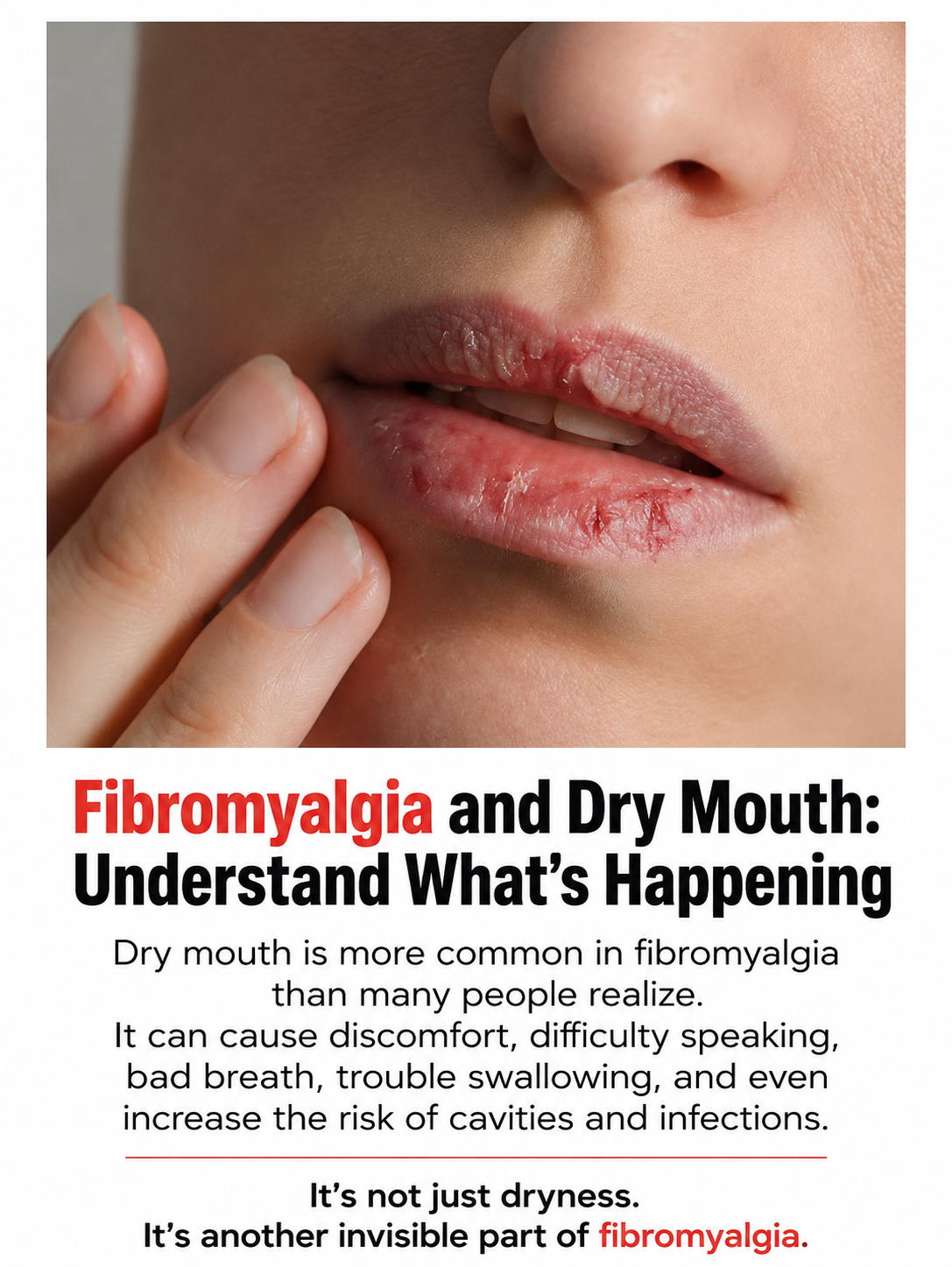
Fibromyalgia is a chronic condition commonly associated with widespread pain, persistent fatigue, sleep disturbances, and problems with concentration or memory. However, people living with fibromyalgia can experience many other symptoms that receive far less attention. One of these is dry mouth, medically known as xerostomia.
Dry mouth may seem like a minor problem, but when it continues for weeks or months, it can become surprisingly uncomfortable. It may make talking, chewing, swallowing, eating, and even sleeping more difficult. A persistent lack of saliva can also affect oral health by increasing the risk of tooth decay, gum problems, bad breath, and oral infections.
For people with fibromyalgia, dry mouth may have several possible causes. It can be related to medications used to manage pain, anxiety, depression, or sleep problems. Sleep-related mouth breathing can also make the problem worse. In some cases, persistent dry mouth may be associated with another medical condition, such as Sjögren’s syndrome, an autoimmune disease that can reduce saliva production.
This article explains the connection between fibromyalgia and dry mouth, common causes of xerostomia, symptoms to watch for, ways to relieve dry mouth, available treatment options, and when you should speak with a healthcare professional.
What Is Dry Mouth or Xerostomia?
Dry mouth, or xerostomia, is the feeling of having insufficient moisture in the mouth. It can occur when the salivary glands do not produce enough saliva or when saliva does not adequately lubricate the mouth.
Saliva plays several important roles. It keeps the mouth moist, helps break down food, makes chewing and swallowing easier, supports speaking, and helps protect teeth and oral tissues.
When saliva production decreases, the problem is therefore more than simple discomfort.
Common dry mouth symptoms include:
- A persistent dry or sticky feeling in the mouth.
- Frequent thirst or the need to sip water.
- Difficulty speaking for long periods.
- Difficulty chewing or swallowing dry foods.
- A dry or burning tongue.
- Cracked lips.
- Changes in taste.
- Bad breath.
- Thick or stringy saliva.
- Increased tooth decay.
- Mouth irritation or sores.
Occasional dry mouth is usually different from persistent xerostomia. It is normal to experience temporary dryness after exercising, going several hours without drinking, feeling anxious, or waking up after sleeping with your mouth open.
However, dry mouth that continues for weeks or begins to interfere with eating, speaking, sleeping, or oral health deserves attention.
What Is the Connection Between Fibromyalgia and Dry Mouth?
The relationship between fibromyalgia and dry mouth can be complicated because there is not always one single cause.
Fibromyalgia involves changes in how the nervous system processes pain and other signals. Changes involving the autonomic nervous system may also influence certain involuntary body functions, potentially including processes involved in saliva production.
However, medications are an especially important consideration.
People with fibromyalgia may take medications to manage pain, mood symptoms, anxiety, muscle tension, or sleep problems. Several types of medications can cause dry mouth as a side effect.
Some people may notice xerostomia after starting a new medication, while others may experience worsening symptoms when multiple medications with drying effects are combined.
This does not mean that you should stop your medication. If you believe your treatment is contributing to dry mouth, speak with the healthcare professional who prescribed it. Depending on your circumstances, they may be able to adjust the dosage, change the timing, or consider another treatment.
Sleep Problems Can Make Dry Mouth Worse
Sleep disturbances are common among people with fibromyalgia. During sleep, some people may breathe through their mouth, particularly if they have nasal congestion, snoring, or certain sleep-related breathing problems.
Mouth breathing for several hours can significantly increase oral dryness.
If you regularly wake up with a very dry mouth, dry throat, or a strong need to drink water during the night, consider discussing these symptoms with a healthcare professional. Addressing an underlying sleep or breathing problem may help reduce nighttime dry mouth.
Can Fibromyalgia Medications Cause Dry Mouth?
Yes. Medication-related dry mouth is a common cause of xerostomia.
A number of medications can reduce saliva production or increase the sensation of oral dryness. These may include certain:
- Antidepressants.
- Anxiety medications.
- Pain medications.
- Muscle relaxants.
- Sleep medications.
- Antihistamines.
- Blood pressure medications and other prescription drugs.
The effect varies from person to person. One individual may take a particular medication without experiencing noticeable dryness, while another may develop significant xerostomia.
If your dry mouth began shortly after starting or changing a medication, tell your doctor or pharmacist. They can review your medications and determine whether one or more could be contributing to the problem.
Do not stop prescription medication on your own. Some medications need to be reduced gradually or replaced under medical supervision.
Fibromyalgia and Sjögren’s Syndrome: Is There a Connection?
Sjögren’s syndrome is an autoimmune condition that can affect the glands responsible for producing saliva and tears. Persistent dry mouth and dry eyes are among its best-known symptoms.
Because symptoms can overlap between fibromyalgia, Sjögren’s syndrome, and other conditions, it may sometimes be difficult to determine the cause of persistent dryness based on symptoms alone.
Having fibromyalgia does not automatically mean that you have Sjögren’s syndrome. Dry mouth has many possible causes, including medications, dehydration, mouth breathing, anxiety, and other health conditions.
However, persistent or severe dry mouth may deserve further evaluation, particularly when it occurs together with chronically dry eyes, difficulty swallowing, recurrent oral infections, or unusually frequent dental problems.
A rheumatologist or another qualified healthcare professional can review your symptoms, medical history, and examination findings and determine whether further testing is appropriate.
Sjögren’s syndrome should not be diagnosed based solely on dry mouth.
What Problems Can Dry Mouth Cause?
Saliva provides natural protection for the mouth. When saliva production decreases, several oral health problems can become more likely.
1. Bad Breath
Reduced saliva can change the environment inside the mouth and contribute to bad breath, also known as halitosis.
Maintaining good oral hygiene and drinking enough water may help. However, persistent bad breath should be evaluated by a dentist, especially if it is accompanied by other oral symptoms.
2. Difficulty Chewing and Swallowing
Dry foods such as crackers, bread, rice, or certain meats may become harder to chew and swallow when there is not enough saliva.
Some people find themselves drinking water during meals simply to make food easier to swallow.
Choosing moist foods and adding sauces or broths can sometimes make meals more comfortable.
3. Changes in Taste
Saliva helps dissolve substances in food and contributes to the way we perceive flavors.
As a result, people with xerostomia may notice that food tastes different or less flavorful than usual.
4. Increased Risk of Tooth Decay
Saliva helps protect teeth from the effects of acids and supports the mouth’s natural protective processes.
When saliva production is significantly reduced, the risk of tooth decay and cavities can increase.
For this reason, people with chronic dry mouth should pay particular attention to oral hygiene and regular dental examinations.
5. Gum Problems
Persistent dry mouth can contribute to an unhealthy oral environment. Some people may develop gum irritation, inflammation, tenderness, or bleeding.
These symptoms should be discussed with a dentist rather than simply being attributed to fibromyalgia.
6. Oral Thrush
People with persistent dry mouth may be more susceptible to certain oral infections, including oral candidiasis, commonly called oral thrush.
White patches, redness, burning, soreness, or unusual changes inside the mouth should be assessed by a healthcare professional or dentist.
How Can You Relieve Dry Mouth From Fibromyalgia?
There are several practical strategies that may help manage fibromyalgia-related dry mouth.
Drink Water Regularly
Instead of waiting until you become very thirsty, take small sips of water throughout the day.
Keeping a water bottle nearby can make regular hydration easier, especially when working, traveling, or talking for extended periods.
Stimulate Saliva Production
Sugar-free chewing gum or sugar-free candies can stimulate saliva production in some people.
Sugar-containing candies should not be used regularly as a solution for dry mouth because reduced saliva combined with frequent sugar exposure can increase the risk of tooth decay.
Choose Moist Foods
Soups, yogurt, soft foods, and water-rich fruits may be easier to eat when your mouth is dry.
You do not necessarily need to change your entire diet. Simple adjustments can make meals more comfortable.
Adding broth, gravy, or a suitable sauce to dry foods may also make chewing and swallowing easier.
Be Careful With Drinks That May Increase Dryness
Some people notice that coffee, alcohol, and certain caffeinated or sugary drinks make their mouth feel drier.
Alcohol can also contribute to dehydration and may be particularly irritating for an already dry mouth.
If you notice that a particular beverage consistently makes your symptoms worse, reducing it may help.
Maintain Good Oral Hygiene
Good oral hygiene becomes especially important when saliva production is reduced.
Brush your teeth regularly with fluoride toothpaste and clean between your teeth as recommended by your dental professional.
Some people prefer alcohol-free mouthwash because alcohol-containing products may feel irritating or drying for people with xerostomia.
Use a Humidifier
A humidifier may help some people, particularly during sleep in a dry environment.
If you use one, clean it regularly according to the manufacturer’s instructions. Proper cleaning helps prevent the buildup of microorganisms.
Avoid Smoking
Smoking can negatively affect oral health and may worsen irritation and unpleasant mouth symptoms.
Quitting smoking can provide important benefits for both oral and overall health.
What Treatments Are Available for Dry Mouth?
Treatment depends largely on the underlying cause of xerostomia.
If a medication is contributing to the problem, a doctor may determine whether an alternative is appropriate. Medication changes should always be made with professional guidance.
Artificial saliva products are another option. They are available in forms such as sprays, gels, rinses, or solutions and can provide temporary relief by moisturizing the mouth.
For certain people with significant salivary gland dysfunction, a healthcare professional may consider medications that stimulate saliva production, such as pilocarpine or cevimeline.
These medications are not suitable for everyone and can have side effects or contraindications. They should therefore only be used under appropriate medical supervision.
Dental care is also an important part of managing chronic dry mouth. Regular dental visits can help identify cavities, gum disease, oral infections, and other complications before they become more serious.
When Should You See a Doctor or Dentist?
Occasional dry mouth is usually not a major concern. Persistent xerostomia, however, deserves attention, particularly if it interferes with normal daily activities.
Consider speaking with a healthcare professional if:
- Your dry mouth lasts for several weeks.
- You have significant difficulty chewing or swallowing.
- Your tongue remains painful or burns frequently.
- You experience repeated oral infections.
- You develop multiple cavities.
- Your gums are frequently swollen or bleeding.
- You have persistent dry eyes along with dry mouth.
- You believe a medication is causing the problem.
- Dry mouth is affecting your eating, speaking, or sleep.
A dentist can examine your teeth, gums, tongue, and other oral tissues. A physician or rheumatologist can investigate possible underlying medical causes when appropriate.
Frequently Asked Questions About Fibromyalgia and Dry Mouth
Can fibromyalgia cause dry mouth?
Dry mouth can occur in people with fibromyalgia, but it should not automatically be assumed to be caused directly by fibromyalgia. Medications, dehydration, mouth breathing, sleep problems, and other medical conditions can also cause xerostomia.
Which fibromyalgia medications can cause dry mouth?
Several medications used to manage pain, mood, anxiety, muscle symptoms, or sleep can cause dry mouth as a side effect. The likelihood depends on the specific medication and the individual. If you suspect your medication is responsible, speak with your doctor before making any changes.
Does dry mouth mean I have Sjögren’s syndrome?
No. Dry mouth has many possible causes. Sjögren’s syndrome is one possible explanation, but it is not the only one.
Persistent dry mouth, particularly when accompanied by persistent dry eyes, recurrent oral infections, or other unexplained symptoms, may warrant medical evaluation.
What should I drink for dry mouth?
Water is one of the simplest choices for maintaining hydration. Taking small sips throughout the day may be more comfortable than drinking a large amount at once.
Does chewing gum help dry mouth?
Sugar-free chewing gum can stimulate saliva production and may provide relief for some people. Choosing sugar-free products is particularly important because chronic dry mouth can increase the risk of cavities.
Final Thoughts
Dry mouth and fibromyalgia may not receive as much attention as widespread pain, fatigue, or sleep problems, but xerostomia can have a meaningful impact on daily life.
Persistent oral dryness can make eating, speaking, swallowing, and sleeping uncomfortable. It can also increase the risk of cavities, gum problems, bad breath, and oral infections.
The cause is not always fibromyalgia itself. Medications, nighttime mouth breathing, dehydration, sleep problems, and other medical conditions can all contribute. In some people, persistent dry mouth may also warrant evaluation for conditions such as Sjögren’s syndrome.
Simple measures such as drinking water regularly, using sugar-free gum, choosing moist foods, maintaining excellent oral hygiene, avoiding smoking, and using appropriate oral moisturizers may provide relief.
Most importantly, persistent or severe dry mouth should not simply be ignored. If symptoms continue for several weeks, interfere with eating or speaking, or occur alongside persistent dry eyes, recurrent infections, significant oral pain, or swallowing difficulties, speak with a healthcare professional and dentist.
Finding the underlying cause and choosing the right treatment can make xerostomia easier to manage and improve quality of life for people living with fibromyalgia.