Living with fibromyalgia pain can be exhausting. A simple movement, an uncomfortable chair, poor sleep, stress, or even a busy day can sometimes make pain feel much worse. People with fibromyalgia often spend a great deal of time looking for ways to cope with pain without adding another medication or complicated treatment to their routine.
But what if one surprisingly simple response to pain could make it feel a little more manageable?
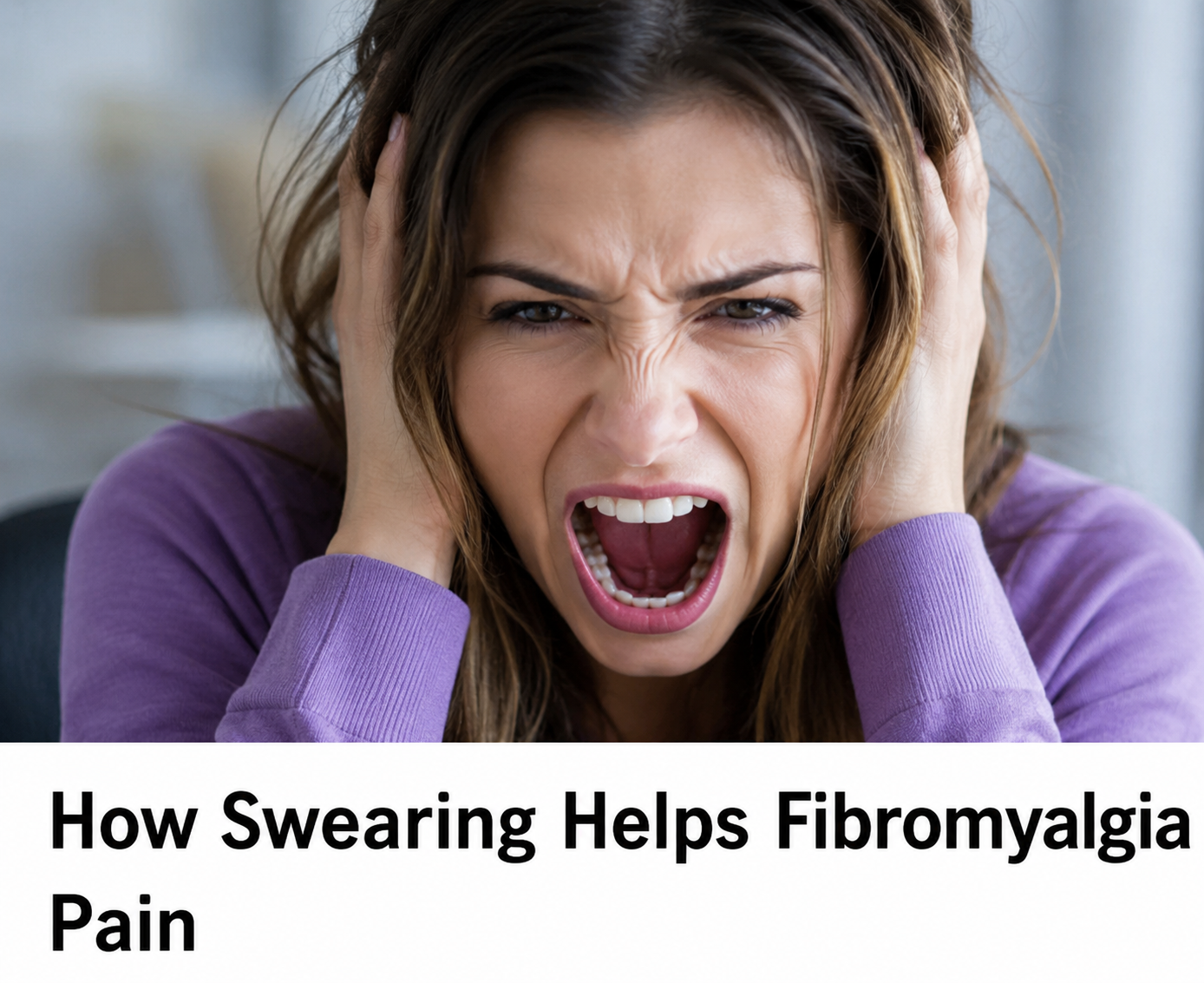
Swearing.
It might sound strange, humorous, or even completely ridiculous, but researchers have found that using emotionally charged swear words can temporarily increase a person’s ability to tolerate certain types of physical pain. Studies have repeatedly explored this phenomenon using controlled pain experiments, particularly the cold-water hand test.
This raises an interesting question for people living with fibromyalgia: Can swearing help fibromyalgia pain?
The short answer is: possibly, but there is an important difference between evidence about pain in general and evidence specifically involving fibromyalgia.
Researchers have not established swearing as a treatment for fibromyalgia. However, because fibromyalgia involves changes in how the nervous system processes pain, the research into emotional responses, pain tolerance, and the brain’s response to painful stimuli is certainly interesting.
Let’s look at what science actually says.
What Is Fibromyalgia Pain?
Before discussing swearing, it helps to understand why fibromyalgia pain can feel so different from ordinary aches and injuries.
Fibromyalgia is a chronic pain condition associated with widespread pain, fatigue, sleep problems, and other symptoms. People with fibromyalgia may experience pain throughout different areas of the body rather than in one specific injured location. The condition is also associated with changes in how the nervous system processes and responds to pain.
One concept often discussed in fibromyalgia is central sensitization.
In simple terms, the nervous system can become more sensitive to signals. Instead of treating certain sensations as relatively minor, the brain and nervous system may amplify them. This can contribute to increased pain sensitivity and symptoms such as hyperalgesia or allodynia.
That is one reason why fibromyalgia pain management is not simply about treating an injured muscle or joint.
Pain is an experience created through complex interactions involving the body, brain, emotions, attention, previous experiences, and the nervous system.
And this is where swearing becomes interesting.
Can Swearing Actually Increase Pain Tolerance?
The idea that swearing might affect pain isn’t just an internet myth.
In an early experiment published in 2009, researchers asked participants to repeat either a swear word or a neutral word while completing a cold-water pain test. Participants who repeated the swear word were able to tolerate the painful stimulus for longer. They also showed an increase in heart rate and reported lower perceived pain compared with the neutral-word condition.
The researchers described this as a hypoalgesic effect, meaning a reduction in sensitivity to pain.
The finding was surprising because people often swear because something hurts. Researchers initially wondered whether swearing might actually make people focus more on the pain.
Instead, the results suggested the opposite could happen under certain circumstances.
A later study examined whether people who swore frequently experienced the same benefit. The researchers found that swearing increased pain tolerance, but people who reported frequent everyday swearing appeared to experience a smaller effect. This suggests that the emotional impact of the words may matter.
In other words, if a particular swear word feels emotionally powerful to you, it may have a different effect than simply repeating a word that has become part of your everyday vocabulary.
Why Might Swearing Reduce Pain?
Scientists are still investigating exactly why swearing can affect pain.
One possibility involves emotional arousal.
Strong language can produce an immediate emotional reaction. It can make the body more alert and activate physiological responses associated with stress or threat. In the original research, swearing was associated with increased heart rate, suggesting that the body was responding differently compared with neutral speech.
Think about what happens when you accidentally hit your finger against something.
You may immediately shout a swear word before you even think about it.
That reaction isn’t necessarily deliberate. Strong language can act as an emotional outlet.
Researchers have proposed that this emotional activation may temporarily influence the body’s pain-control systems.
Another possibility is that swearing changes how attention and emotion interact with pain. However, later research found that simple distraction did not fully explain the effect. Researchers suggested that emotional arousal may be important, although the exact mechanism remains uncertain.
This distinction is important.
Scientists know that swearing can influence pain tolerance in controlled experiments. They do not yet have a complete explanation for exactly how or why this happens.
The Brain and Pain Connection
Pain isn’t simply a message traveling from an injured body part to the brain.
The brain constantly evaluates incoming signals and decides how important, threatening, or painful they are.
This is especially relevant to fibromyalgia because altered pain processing is an important part of current understanding of the condition.
Emotions can influence this process.
Fear can make pain feel more threatening. Stress can make symptoms harder to manage. Relaxation can sometimes make discomfort easier to tolerate.
Strong emotional reactions, including those produced by swearing, may therefore influence the way someone responds to a painful experience.
But this does not mean that fibromyalgia pain is imaginary or “all in your head.”
Quite the opposite.
Fibromyalgia involves real changes in pain processing, and the brain and nervous system are fundamental parts of how all pain is experienced.
Does Swearing Specifically Help Fibromyalgia Pain?
This is where we need to be careful.
The existing research on swearing and pain does not establish that swearing is a treatment for fibromyalgia.
Most of the experimental studies involved healthy participants exposed to short-term, controlled painful stimuli, such as immersing a hand in cold water.
Fibromyalgia is very different.
Fibromyalgia involves chronic, often widespread pain, along with symptoms such as fatigue and sleep disturbance.
A few seconds of experimentally induced pain cannot fully reproduce what it feels like to live with fibromyalgia every day.
Therefore, it would be misleading to say:
“Swearing cures fibromyalgia pain.”
There is no evidence to support that claim.
A more accurate statement is:
Research suggests that emotionally powerful swearing can temporarily increase pain tolerance in some situations, but scientists have not established it as a fibromyalgia treatment.
That distinction matters.
Still, the finding may be useful when thinking about coping with fibromyalgia pain.
Could Swearing Be a Short-Term Coping Strategy?
For some people, perhaps.
Imagine that you’re experiencing a sudden pain flare. You stand up, move awkwardly, or bump your body against something, and an involuntary swear word comes out.
You may notice that expressing the frustration makes the moment feel slightly easier.
That doesn’t mean the underlying fibromyalgia pain has disappeared.
Instead, the emotional response may temporarily change your experience of that particular moment.
The same principle may explain why some people instinctively groan, shout, laugh, or make other sounds when something hurts.
These reactions can provide an emotional outlet.
Research published in 2020 found that conventional swearing increased pain threshold and pain tolerance in an experimental cold-water test. Interestingly, researchers also tested made-up words that were designed to sound emotional or humorous. Those invented words did not produce the same pain benefits.
That suggests the emotional meaning attached to a word may matter.
Does More Swearing Mean More Pain Relief?
Not necessarily.
In fact, research suggests the opposite may happen.
The 2011 study examining daily swearing frequency found that people who swore more frequently appeared to experience a smaller pain-tolerance benefit when they were instructed to swear.
One possible explanation is habituation.
If you use strong language constantly, it may become less emotionally powerful.
Think of it like listening to your favorite song repeatedly. The first few times it may produce a strong emotional reaction. After hearing it hundreds of times, the effect may not be quite as intense.
The same basic principle may apply to emotionally charged words.
So if someone is already swearing frequently throughout the day, increasing the amount of swearing is unlikely to be a reliable strategy for controlling chronic pain.
Swearing, Stress, and the Fibromyalgia Pain Cycle
Stress is an important consideration when discussing fibromyalgia.
Many people with chronic pain notice that difficult days can involve several symptoms at once: increased pain, poor sleep, fatigue, irritability, difficulty concentrating, and emotional exhaustion.
Fibromyalgia isn’t simply about one isolated pain signal. It can affect many areas of daily life.
Strong emotional reactions may temporarily change how we respond to pain, but long-term pain management requires a much broader approach.
This is why swearing should be viewed, at most, as a minor coping technique, rather than a primary treatment.
If saying a strong word after suddenly experiencing pain helps you release frustration, there is nothing mysterious about that emotional response.
But it shouldn’t replace treatments or strategies recommended by a healthcare professional.
What About People Who Don’t Like Swearing?
You don’t need to swear to cope with pain.
The research doesn’t mean that everyone should start using profanity.
People respond differently to language, emotions, culture, and pain.
For someone who dislikes swearing, a strong but non-offensive expression might provide an emotional release without violating personal or cultural preferences.
The important factor may be the emotional intensity of the response rather than simply using offensive language.
However, the studies have specifically examined conventional swear words, so we shouldn’t assume that every substitute expression will produce the same physiological effect. The research involving invented “swear” words is a good example of why the emotional meaning of language may matter.
Other Evidence-Based Ways to Manage Fibromyalgia Pain
If you’re living with fibromyalgia, there are many strategies with considerably more relevance to long-term symptom management than swearing.
Depending on the individual, a treatment plan may include physical activity, appropriate exercise, sleep management, psychological strategies, medications, and other therapies recommended by a healthcare professional.
The CDC notes that fibromyalgia does not currently have a cure, but symptoms can be managed through self-care, therapies, and medicines.
Because fibromyalgia affects people differently, there isn’t one solution that works for everyone.
Some people benefit from gentle physical activity. Others find that improving sleep, pacing daily activities, reducing stress, or using specific medical treatments makes a significant difference.
The goal isn’t necessarily to eliminate every sensation of pain overnight.
Instead, effective fibromyalgia pain management often involves finding ways to reduce symptom severity, improve daily function, and make flare-ups easier to handle.
The Bottom Line: Can Swearing Help Fibromyalgia Pain?
So, how does swearing help fibromyalgia pain?
The honest answer is that we don’t yet know whether it directly helps fibromyalgia.
What researchers do know is that swearing can temporarily increase pain tolerance in controlled experiments involving acute physical pain. Studies have also found changes in heart rate and other responses associated with emotional arousal.
However, those studies were not designed to prove that swearing treats fibromyalgia.
Fibromyalgia is a chronic pain condition involving altered pain processing, and living with it is very different from experiencing a short-term laboratory pain stimulus.
Therefore, if an occasional swear word slips out during a painful moment, you don’t necessarily need to feel guilty about it. It may provide a brief emotional release, and research suggests that strong language can influence pain tolerance.
Just don’t think of it as a cure.
Perhaps the most interesting lesson from this research isn’t that people should swear more. It is that pain is influenced by much more than physical signals alone.
Emotion, attention, stress, expectations, and the nervous system all interact with the experience of pain.
For someone with fibromyalgia, understanding that relationship can be empowering.
Your pain is real. Your nervous system plays an important role in how intensely you experience it. And while swearing isn’t a proven treatment for fibromyalgia, the research offers another fascinating example of how the brain and body interact when we hurt.
If your fibromyalgia pain is becoming more severe, changing significantly, or interfering with everyday activities, speak with a qualified healthcare professional rather than relying on informal pain-relief techniques alone.
Frequently Asked Questions
Can swearing reduce pain?
Research suggests that swearing can temporarily increase pain tolerance during certain experimental pain tests.
Does swearing cure fibromyalgia?
No. There is currently no evidence that swearing cures or treats the underlying condition of fibromyalgia.
Why does swearing sometimes make pain feel easier?
Researchers believe emotional arousal may contribute to the effect, although the exact mechanism is not fully understood.
Does swearing work for everyone?
No. Individual responses vary, and frequent everyday swearing may reduce the pain-tolerance effect observed in experimental studies.
Can people with fibromyalgia use swearing as a coping technique?
An occasional swear word may provide emotional release during a painful moment, but it should be considered a minor coping strategy rather than a medical treatment for fibromyalgia.