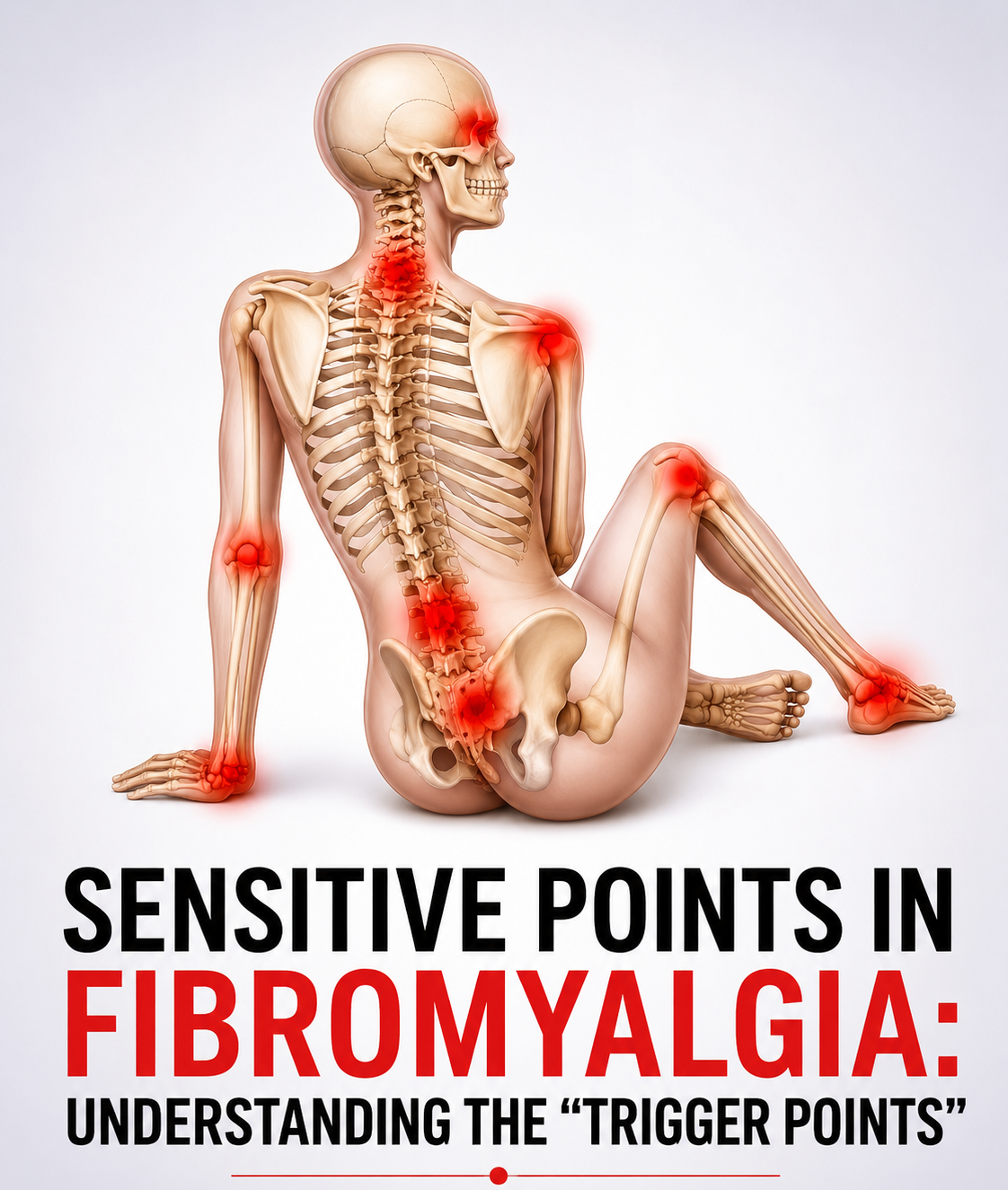
Fibromyalgia is a complex condition that affects muscles, joints, and soft tissues, causing generalized chronic pain. One of the most well-known characteristics of fibromyalgia is the so-called trigger points, which are specific areas of the body extremely sensitive to pain and pressure. 
These points can vary in intensity, location, and even in the way they cause discomfort from person to person. Let’s get to know the main ones:
 : Located at the base of the skull, these points can cause headaches and neck tension.
 : At the lower part of the neck, pressure here can cause stiffness and a feeling of a “stuck” neck.
 : Upper part of the shoulder; touching it can cause deep pain in the chest.
 : Region near the scapula, on the top of the back, sensitive to arm movement.
 : Lower part of the second rib; touching it can cause deep pain in the chest.
 : External part of the elbow; pressing it can cause pain that sometimes radiates to the thigh.
 : Upper part of the shin; pressure can cause pain that sometimes radiates to the knee.
 : External part of the hip; sensitive to touch, when sitting or lying down on the side.
 : Inner part of the knee; can cause pain when bending or climbing stairs.
 Important notes:
If you suspect fibromyalgia or recognize persistent pain in trigger points, seek a healthcare professional for evaluation, diagnosis, and appropriate management. Treatment may include physical therapies, light exercise, relaxation techniques, and pain control strategies. 


 Remember: feeling pain in trigger points does not mean weakness or laziness — it is a real manifestation of the disease, and validation is the first step toward care and relief.
What Are Fibromyalgia Trigger Points?
The term trigger points is often used online when discussing fibromyalgia, but there is an important distinction between trigger points and tender points.
A trigger point is generally used to describe a particularly sensitive area within a muscle that may be associated with localized pain and sometimes referred pain. Fibromyalgia, on the other hand, is characterized by widespread pain and increased sensitivity rather than a problem confined to individual muscles.
Historically, fibromyalgia was associated with 18 specific tender points, arranged as nine paired areas on both sides of the body. The older 1990 American College of Rheumatology classification criteria considered widespread pain together with tenderness in at least 11 of those 18 sites.
However, this approach has changed.
Modern diagnostic approaches recognize that fibromyalgia tenderness is more widespread than those original 18 locations. The American College of Rheumatology’s later criteria moved away from requiring a tender-point examination and placed greater emphasis on the distribution of pain and associated symptoms.
So, if you experience pain outside the commonly discussed tender points, that does not rule out fibromyalgia.
9 Common Fibromyalgia Tender Areas
Although tender points are no longer used as the sole basis for diagnosing fibromyalgia, the traditional locations remain useful for understanding how fibromyalgia tenderness was historically described.
1. Occipital Area: Base of the Skull
The occipital region is located at the back of the head, near the base of the skull.
Some people with fibromyalgia experience tenderness, aching, or sensitivity in this area. Pain around the back of the head may occur together with neck discomfort or headaches.
A person may notice that resting the head against a firm surface or pressing the muscles near the base of the skull feels uncomfortable.
However, headaches and pain in this region are not specific to fibromyalgia. Several other conditions can cause pain around the back of the head and neck, which is why persistent or severe symptoms should be evaluated rather than self-diagnosed.
2. Cervical Region: Lower Neck
The cervical region refers to the neck.
Neck pain and stiffness are frequently reported by people with fibromyalgia. The area may feel tight, sore, heavy, or unusually sensitive to touch.
Some people describe the sensation as though their neck is “stuck” or difficult to move comfortably. Others notice discomfort after sitting at a desk, looking down at a phone, or sleeping in an uncomfortable position.
Fibromyalgia can also occur alongside other musculoskeletal problems, so neck pain should not automatically be attributed to fibromyalgia.
3. Trapezius: Upper Shoulder
The trapezius muscles extend across the upper back and shoulders.
This is a commonly uncomfortable area for people experiencing chronic widespread pain. The shoulders may feel tense, heavy, aching, or sensitive when touched.
Stress, poor posture, prolonged computer use, lack of sleep, and physical activity can all influence shoulder discomfort. In someone with fibromyalgia, these factors may add to an already heightened sensitivity to pain.
Rather than thinking of one painful spot as proof of fibromyalgia, it is more useful to consider whether shoulder tenderness occurs as part of a broader pattern of widespread pain and other symptoms.
4. Supraspinatus Area: Upper Back Near the Shoulder Blade
The supraspinatus region is located near the upper part of the shoulder blade.
Tenderness around this area may become noticeable when reaching, lifting, moving the arm, or applying pressure to the surrounding muscles.
People sometimes describe fibromyalgia pain as deep aching rather than a sharp injury-like sensation. The discomfort can also fluctuate. One day an area may feel relatively manageable, while another day even light pressure may be unpleasant.
This variability is common in chronic pain conditions and can make fibromyalgia difficult to predict.
5. Second Rib Area: Upper Chest
Another historically recognized tender location is around the upper chest near the second rib.
Chest-wall tenderness can sometimes feel alarming because people naturally associate chest pain with heart or lung problems. Fibromyalgia can cause pain in the chest and rib areas, but chest pain should never automatically be assumed to be caused by fibromyalgia.
New, severe, unexplained, or concerning chest pain requires prompt medical assessment, particularly when accompanied by symptoms such as difficulty breathing, fainting, sweating, or significant pressure or tightness.
The important point is that fibromyalgia can involve chest-wall discomfort, but it should be diagnosed only after an appropriate clinical evaluation.
6. Lateral Epicondyle: Outside of the Elbow
The lateral epicondyle is located on the outside of the elbow.
Tenderness here may make activities involving the arms and hands uncomfortable. A person might notice pain while gripping objects, lifting something, typing for extended periods, or leaning the elbow against a hard surface.
Because elbow pain can also occur with conditions such as tendinopathy or other musculoskeletal problems, location alone cannot establish that fibromyalgia is responsible.
In fibromyalgia, the significance of elbow tenderness comes from the overall symptom pattern, especially when it occurs alongside widespread pain, fatigue, sleep difficulties, and cognitive symptoms.
7. Gluteal Region: Buttock Area
The gluteal region includes the muscles around the buttocks and upper hip.
Tenderness here can make sitting for long periods uncomfortable. Some people may also notice aching when walking, exercising, climbing stairs, or remaining in one position for too long.
Fibromyalgia pain can move or fluctuate between different areas of the body. A person may experience more discomfort in the hips and buttocks during one period and notice greater shoulder, neck, or leg pain during another.
This changing pattern is one reason keeping a symptom diary can be helpful when discussing chronic pain with a healthcare professional.
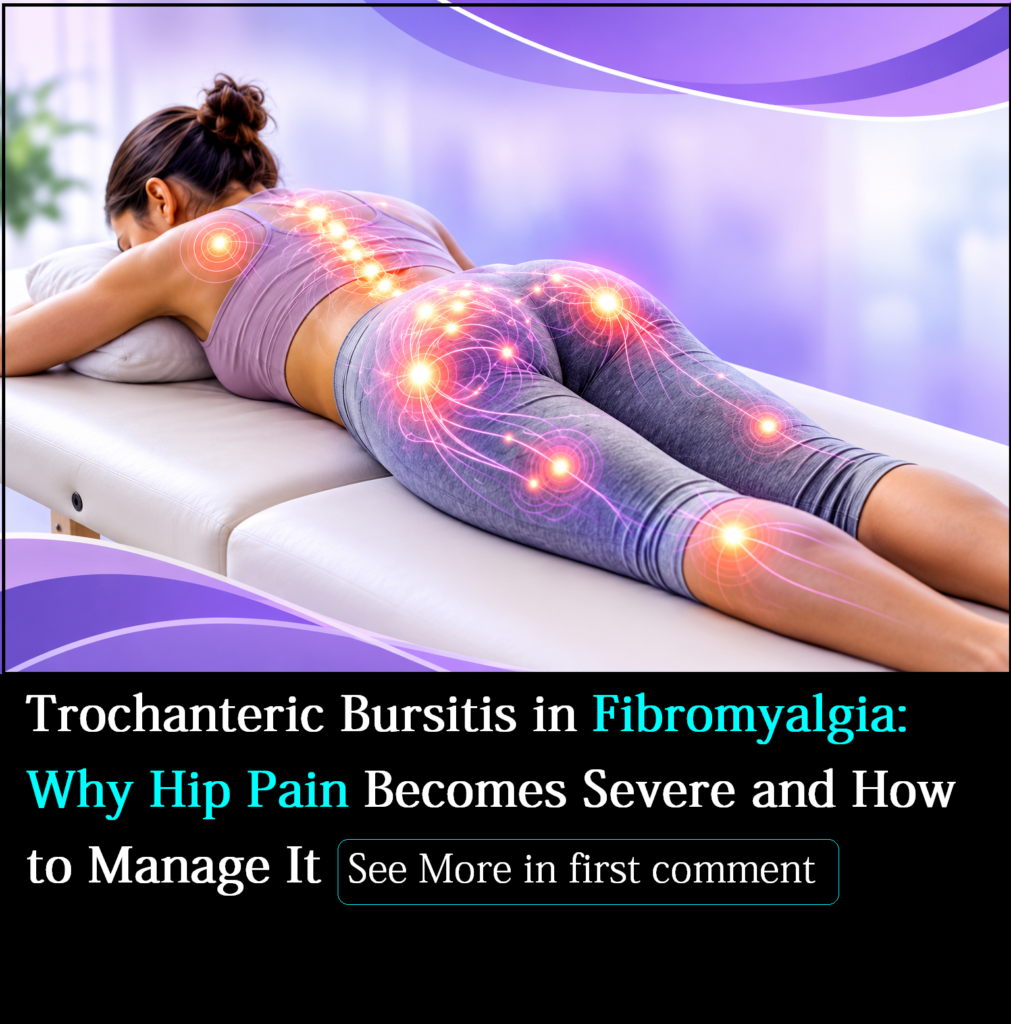
8. Greater Trochanter: Outer Hip
The greater trochanter is a bony prominence on the outer side of the upper thigh, close to the hip.
Pain in this area can become particularly noticeable when lying on the affected side, sitting for extended periods, or putting pressure on the outer hip.
People sometimes confuse outer-hip tenderness with other conditions, including problems involving the muscles, tendons, or bursae around the hip.
If hip pain is persistent, severe, associated with weakness, or interfering with normal movement, professional evaluation can help determine the underlying cause.
9. Inner Knee
The inner knee was another traditional location included in the older tender-point examination.
Knee tenderness can make activities such as climbing stairs, squatting, kneeling, or getting up from a chair uncomfortable.
However, knee pain is extremely common and can have many causes. Arthritis, injuries, tendon problems, bursitis, and other musculoskeletal conditions may produce similar symptoms.
For someone with suspected fibromyalgia, the key question is not simply whether the knee hurts. It is whether the knee pain occurs as part of a broader pattern of widespread pain and other characteristic symptoms.
What Does Fibromyalgia Pain Feel Like?
Fibromyalgia pain does not feel exactly the same for everyone.
People may describe it as:
- Deep aching
- Burning pain
- Throbbing
- Stiffness
- Muscle soreness
- Tenderness to touch
- Sensitivity to pressure
- Tingling or unusual sensations
- Pain that seems to move between different areas
- Increased pain after physical or emotional stress
According to the National Institute of Arthritis and Musculoskeletal and Skin Diseases, fibromyalgia is associated with widespread pain and tenderness, fatigue, sleep difficulties, and problems with concentration or memory. Some people also experience increased sensitivity to light, sound, odors, or temperature.
The pain may also fluctuate.
A person might have a relatively good day followed by a flare in which several parts of the body suddenly feel more painful. Sleep quality, stress, activity levels, illness, and other factors may influence symptoms.
Fibromyalgia Tender Points vs. Widespread Pain
One of the most important things to understand about fibromyalgia tender points is that they are not a checklist that can independently diagnose the condition.
The older ACR criteria emphasized 18 tender points. But researchers later recognized several limitations with that approach. Tenderness can occur throughout the body rather than only at those specific sites, and some people with genuine fibromyalgia may not have the number of tender points required by the older system.
Modern assessment therefore looks at the person as a whole.
A healthcare professional may consider:
- How widespread the pain is
- How long the symptoms have been present
- Fatigue
- Sleep quality
- Cognitive symptoms or “fibro fog”
- Headaches and other associated symptoms
- Physical examination findings
- Other possible explanations for the symptoms
There is no single blood test or imaging scan that confirms fibromyalgia. Doctors may use medical history, physical examination, and selected laboratory or imaging tests to investigate other possible causes of widespread pain and related symptoms.
Other Symptoms That Can Occur With Fibromyalgia
Fibromyalgia is much more than muscle pain.
Many people experience several symptoms at the same time.
Fatigue
Persistent exhaustion can be one of the most frustrating symptoms. Someone may sleep for many hours and still wake up feeling as though they have not rested.
Sleep Problems
Difficulty falling asleep, staying asleep, or waking refreshed can contribute to a cycle of fatigue and increased pain.
Fibro Fog
Some people experience problems with concentration, memory, word-finding, or mental clarity. This is commonly referred to as “fibro fog.”
Stiffness
Muscles and joints may feel stiff, particularly after waking up or remaining in one position.
Sensitivity to Touch
Ordinary physical contact may sometimes feel unusually uncomfortable. Clothing, pressure from a mattress, or a gentle touch may cause more discomfort than expected.
Mood Changes
Living with chronic pain and fatigue can affect emotional well-being. Anxiety, depression, stress, and fibromyalgia can also occur together. This does not mean that fibromyalgia pain is imaginary or “all in the head.” Fibromyalgia is a genuine chronic pain condition involving altered pain processing.
Why Does Fibromyalgia Cause Tenderness?
The exact cause of fibromyalgia is not completely understood.
Research suggests that people with fibromyalgia may process pain differently, with increased sensitivity within the nervous system and altered signaling in pathways involved in pain perception.
This helps explain why an amount of pressure that would normally feel harmless can sometimes feel painful.
It also explains why fibromyalgia cannot simply be understood as a problem with sore muscles.
The nervous system plays an important role in how pain is detected, interpreted, and experienced. When pain processing becomes more sensitive, ordinary sensations may be experienced as stronger or more uncomfortable.
How Is Fibromyalgia Diagnosed?
If you have persistent widespread pain and several symptoms associated with fibromyalgia, speak with a healthcare professional.
Diagnosis usually involves a detailed medical history and physical examination. Your clinician may ask about the location and duration of your pain, fatigue, sleep quality, concentration, and other symptoms. Tests may sometimes be used to look for other conditions that could explain your symptoms.
Importantly, you do not need to have pain in every traditional tender-point location to have fibromyalgia.
Likewise, having pain in several of these areas does not automatically mean you have fibromyalgia.
Other conditions can cause widespread or localized pain, so professional evaluation is important.
Managing Fibromyalgia Pain
There is currently no single treatment that eliminates fibromyalgia for everyone. Management usually involves a personalized combination of strategies.
Healthcare professionals may recommend:
- Gradual physical activity
- Exercise or movement therapies
- Physical therapy
- Sleep-improvement strategies
- Stress-management techniques
- Psychological or behavioral therapies
- Medications when appropriate
- Education about chronic pain and self-management
The CDC notes that physical activity, healthy lifestyle habits, good sleep practices, self-management skills, and appropriate medical care can help people manage fibromyalgia symptoms.
The goal is not necessarily to eliminate every symptom overnight. For many people, successful management means gradually improving physical function, sleep, energy, and quality of life while reducing the impact of pain.
When Should You See a Doctor?
Consider speaking with a healthcare professional if pain:
- Persists for several weeks or longer
- Affects multiple areas of your body
- Interferes with work, sleep, or everyday activities
- Occurs alongside severe fatigue
- Is accompanied by sleep problems or cognitive difficulties
- Continues without an obvious explanation
- Is becoming progressively worse
You should also seek urgent medical attention for symptoms that could indicate a medical emergency, such as sudden severe chest pain, significant difficulty breathing, fainting, sudden weakness, or other serious new symptoms.
Final Thoughts on Fibromyalgia Trigger Points
Fibromyalgia trigger points and tender points are often discussed because they were an important part of the historical understanding of fibromyalgia. The traditional locations include the back of the skull, neck, shoulders, upper chest, elbows, buttocks, hips, and knees.
But fibromyalgia is much more complex than a collection of nine painful spots.
Modern understanding recognizes fibromyalgia as a chronic pain condition involving widespread pain and altered pain processing, often accompanied by fatigue, sleep problems, cognitive difficulties, and other symptoms.
If you experience tenderness in several parts of your body, that pain is real. You do not have to “look sick” for your symptoms to matter, and experiencing chronic pain is not a sign of weakness or laziness.
The most helpful next step is to describe your symptoms clearly to a qualified healthcare professional. A proper evaluation can help identify fibromyalgia or another possible cause of your symptoms and guide an appropriate treatment and management plan.
Remember: Fibromyalgia pain can be invisible, but that does not make it less real. Understanding your symptoms, tracking patterns, and seeking appropriate care can be important steps toward better symptom management and improved quality of life.