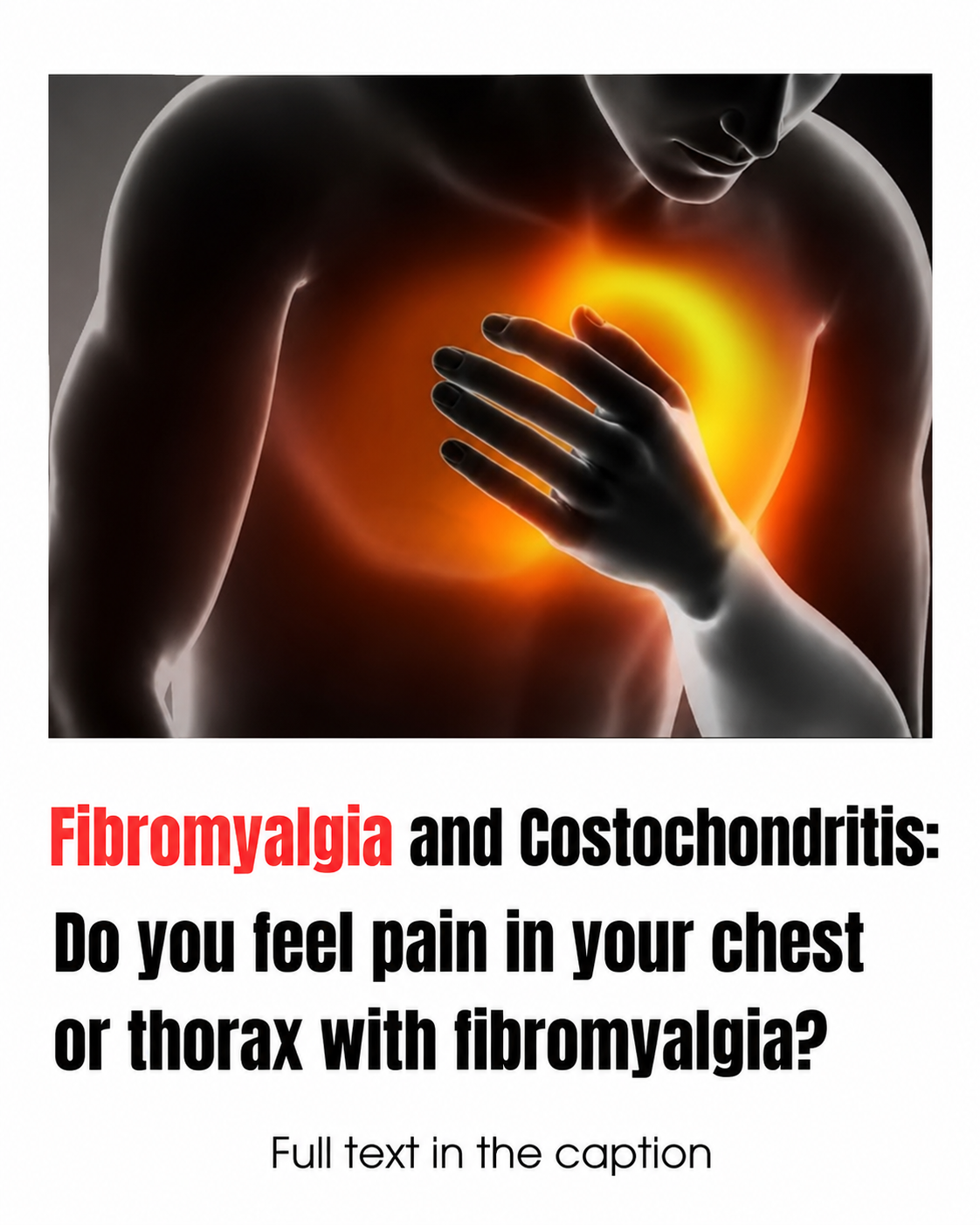
Do you experience chest or thoracic pain with fibromyalgia? Yes, chest or thoracic pain can occur in people with fibromyalgia and is often related to costochondritis—an inflammation of the cartilage that connects the ribs to the sternum. When these two conditions coexist, the discomfort can be intense and frightening.
 Feeling of tightness or pressure in the chestPain upon touch in the rib area.Thoracic muscle stiffnessPain worsens with stress and fatigue.
Recognizing this association helps reduce fear, avoid misdiagnosis, and validate a real, common, and extremely uncomfortable symptom for those living with fibromyalgia.
Fibromyalgia Chest Pain: Causes, Costochondritis, Symptoms, and When to Seek Help
Chest pain can be one of the most frightening symptoms to experience, especially when you live with fibromyalgia. A sudden ache, pressure, tenderness, or sharp pain in the chest can immediately raise concerns about the heart. However, fibromyalgia chest pain can have several possible causes, including muscle tension, altered pain processing, and a condition called costochondritis.
Costochondritis occurs when the cartilage connecting the ribs to the breastbone (sternum) becomes irritated or inflamed. When costochondritis and fibromyalgia occur together, pain may feel particularly intense because fibromyalgia is associated with increased sensitivity to pain.
That does not mean chest pain should automatically be blamed on fibromyalgia. Chest pain can sometimes signal a serious heart, lung, or other medical problem, so new, unexplained, severe, or unusual chest pain should be evaluated promptly by a healthcare professional.
Understanding the connection between fibromyalgia and chest pain can help you recognize possible patterns, communicate more effectively with your healthcare provider, and avoid assuming that every painful sensation has the same cause.
Can Fibromyalgia Cause Chest Pain?
Yes, fibromyalgia can be associated with chest pain, although chest discomfort is not necessarily caused by fibromyalgia itself.
Fibromyalgia is a chronic pain condition involving widespread musculoskeletal pain and changes in how the nervous system processes pain signals. People with fibromyalgia may experience pain in different areas of the body, including the chest, upper back, shoulders, and ribs.
For some people, the discomfort may feel like soreness or aching. Others describe burning, stabbing, pressure, tightness, or sensitivity around the ribs and breastbone.
One possible explanation is central sensitization, a process in which the nervous system becomes more sensitive to pain signals. As a result, sensations that might normally feel mild can be experienced as more painful or persistent.
Chest discomfort may also be influenced by muscle tension. Stress, poor sleep, fatigue, physical exertion, and prolonged muscle contraction can contribute to tightness in the muscles around the chest, shoulders, and upper back.
Because these sensations can resemble symptoms associated with heart problems, fibromyalgia chest pain can understandably cause considerable anxiety.
Fibromyalgia and Costochondritis: What Is the Connection?
One commonly discussed cause of chest wall pain is costochondritis.
Costochondritis involves irritation or inflammation of the cartilage where the ribs connect to the sternum. It most often causes pain toward the front of the chest and may affect one or several rib joints.
The pain can sometimes become more noticeable when you:
- Take a deep breath
- Cough or sneeze
- Move the upper body
- Twist or stretch
- Use the chest muscles
- Press on the painful area
Tenderness that can be reproduced by pressing on the chest wall may suggest that the pain is coming from the musculoskeletal structures. However, this finding alone cannot safely rule out a heart or other serious condition.
For someone with fibromyalgia, costochondritis may feel especially uncomfortable because the nervous system can amplify painful sensations. A relatively localized chest-wall problem may therefore be experienced as intense, persistent, or widespread discomfort.
It is also important to remember that fibromyalgia does not necessarily cause costochondritis. The two conditions can coexist, but chest pain should not automatically be diagnosed as costochondritis simply because a person has fibromyalgia.
What Does Fibromyalgia Chest Pain Feel Like?
There is no single description of fibromyalgia-related chest pain. People may experience several different sensations, and the pattern can change from one episode to another.
Some people report a dull ache across the chest, while others experience sharp or stabbing sensations near the ribs or breastbone.
Common descriptions may include:
Chest Tightness or Pressure
Some people describe a sensation of tightness across the chest. It may feel as though the chest muscles are tense or contracted.
Stress and anxiety can sometimes make this sensation more noticeable. However, pressure or squeezing in the chest should never automatically be attributed to anxiety or fibromyalgia because similar sensations can occur with heart problems.
Rib and Chest Tenderness
The area around the ribs may become sensitive to touch. Clothing, pressure from a seatbelt, or pressing on the chest wall may make the discomfort more apparent.
This type of tenderness can occur with musculoskeletal chest-wall pain, including costochondritis.
Sharp or Stabbing Pain
Fibromyalgia can involve different types of pain, including sharp, burning, or shooting sensations. Chest-wall pain may occasionally feel like a sudden jab that comes and goes.
A sharp sensation does not automatically mean the problem is harmless, however. The location, severity, duration, associated symptoms, and personal medical history all matter.
Muscle Stiffness
Muscle tension involving the chest, shoulders, neck, and upper back can contribute to discomfort around the thoracic region.
Some people notice more stiffness after remaining in one position for a long period, after physical activity, or during periods of increased stress.
Pain That Spreads
Musculoskeletal discomfort may sometimes extend toward the shoulders, upper back, neck, or arms. Because some heart-related conditions can also cause pain in these areas, spreading pain should be assessed carefully rather than assumed to be caused by fibromyalgia.
Why Can Fibromyalgia Make Chest Pain Feel Worse?
One of the important features of fibromyalgia is altered pain processing.
In a healthy nervous system, pain signals are processed and regulated through complex pathways. In fibromyalgia, researchers have identified differences in pain processing and increased sensitivity to certain stimuli.
This is sometimes described in terms of central sensitization or altered central pain processing.
This does not mean that the pain is imaginary. Quite the opposite: the pain is real, but the nervous system may respond to painful or potentially painful stimuli differently.
For example, mild pressure on a sensitive area may feel disproportionately uncomfortable. A small amount of muscle tension may also become much more noticeable.
Several factors can influence how severe fibromyalgia symptoms feel, including:
- Poor sleep
- Physical or mental stress
- Fatigue
- Overexertion
- Anxiety
- Changes in routine
- Other painful conditions
This is one reason a person may notice more fibromyalgia chest pain during stressful or exhausting periods.
However, changes in pain intensity should not be used as a substitute for medical evaluation. A new symptom can occur at the same time as a known chronic condition, and the two may be unrelated.
Fibromyalgia Chest Pain vs. Heart-Related Chest Pain
One of the biggest concerns surrounding chest pain is whether it could be related to the heart.
Unfortunately, it is not possible to reliably determine the cause of chest pain based only on a description in an article or online symptom checklist.
Heart-related chest discomfort can sometimes involve pressure, squeezing, heaviness, burning, or discomfort that spreads to the arm, shoulder, back, neck, or jaw. It may occur with shortness of breath, sweating, nausea, dizziness, or unusual weakness.
Some people, particularly women and older adults, may experience less typical symptoms.
Because symptoms overlap, people with fibromyalgia should not assume that new chest pain is simply another fibromyalgia symptom.
Seek emergency medical attention for chest pain that is severe, sudden, persistent, unexplained, or accompanied by symptoms such as:
- Difficulty breathing
- Fainting or near-fainting
- Severe sweating
- Nausea or vomiting
- Significant dizziness
- A feeling of pressure or squeezing in the chest
- Pain spreading to the arm, shoulder, back, neck, or jaw
- A new or rapidly worsening symptom
If you are unsure whether your symptoms could be an emergency, it is safer to seek urgent medical evaluation.
Other Possible Causes of Thoracic Pain
Not every episode of thoracic pain in someone with fibromyalgia is caused by costochondritis.
The chest contains many structures, including muscles, ribs, cartilage, nerves, lungs, blood vessels, and the heart. Problems involving these structures can produce overlapping symptoms.
Possible causes of chest or upper thoracic discomfort include musculoskeletal strain, costochondritis, reflux-related symptoms, respiratory conditions, nerve-related pain, anxiety, and cardiovascular conditions.
This broad range of possibilities is why self-diagnosis can be risky.
A healthcare professional may consider your symptoms, medical history, medications, risk factors, physical examination, and—when appropriate—tests such as an electrocardiogram or other investigations.
The goal is not to dismiss the possibility of fibromyalgia. Instead, the goal is to make sure potentially serious causes are considered first.
How Is Costochondritis Diagnosed?
There is no single laboratory test that confirms costochondritis in every situation.
Healthcare professionals generally consider the person’s symptoms and perform a physical examination. They may check for localized tenderness and evaluate whether movement or pressure affects the pain.
Because several serious conditions can cause chest pain, clinicians may also determine whether additional testing is necessary.
This distinction is especially important when chest pain is new, unusually severe, associated with breathing difficulties, or accompanied by other concerning symptoms.
If a healthcare professional determines that the discomfort is consistent with costochondritis or another musculoskeletal condition, treatment can then focus on managing the underlying problem.
Managing Fibromyalgia-Related Chest and Thoracic Discomfort
Treatment depends on the actual cause of the pain.
If chest discomfort is related to fibromyalgia, a broader fibromyalgia management strategy may help reduce overall symptom burden. This can include approaches such as appropriate physical activity, improving sleep habits, pacing activities, managing stress, and following an individualized treatment plan recommended by a healthcare professional.
When muscle tension contributes to discomfort, gentle movement and physical therapy may be helpful for some people. A physical therapist can provide exercises designed around a person’s abilities and limitations.
If costochondritis is diagnosed, a healthcare professional may recommend appropriate measures to reduce irritation and manage pain. The best approach depends on the person’s medical history and other medications or conditions.
It is important not to assume that a treatment suitable for one person is automatically appropriate for another. Even commonly available pain medicines can have risks or interactions, so discuss medication choices with a healthcare professional when necessary.
When Should You Talk to a Doctor About Fibromyalgia Chest Pain?
Even when you have lived with fibromyalgia for years, a new type of chest pain deserves attention.
Contact a healthcare professional if:
- Your chest pain is new or different from your usual symptoms.
- The pain keeps returning.
- The discomfort is becoming more severe.
- Pain interferes with sleep or daily activities.
- You have persistent rib or chest tenderness.
- You are unsure whether the symptoms are related to fibromyalgia.
- You develop other symptoms alongside the pain.
Keeping a symptom diary may also help. Record when the pain starts, how long it lasts, what it feels like, what you were doing beforehand, and whether movement, breathing, meals, stress, or physical activity appears to affect it.
This information can help your healthcare professional recognize patterns and decide whether further evaluation is needed.
Living With the Fear of Chest Pain and Fibromyalgia
Chest pain can create a difficult cycle.
A person feels pain, becomes frightened that something is seriously wrong, experiences increased stress, notices greater muscle tension, and then becomes even more aware of the discomfort.
That experience can be exhausting.
Learning about the possible relationship between fibromyalgia, muscle tension, central sensitization, and costochondritis can make symptoms less mysterious. However, reassurance should never replace appropriate medical evaluation.
The most useful approach is to recognize your usual symptom pattern while remaining alert to changes.
If a healthcare professional has previously evaluated your chest pain and determined that it is musculoskeletal or related to another non-cardiac cause, following the recommended management plan can help you feel more confident when familiar symptoms return.
At the same time, a previously diagnosed condition does not protect someone from developing another medical problem. New or significantly different chest symptoms should always be taken seriously.
Final Thoughts
Fibromyalgia chest pain and thoracic pain are real and can be extremely uncomfortable. Muscle tension, altered pain processing, and conditions such as costochondritis may contribute to chest-wall discomfort in people living with fibromyalgia.
Costochondritis typically produces tenderness and pain around the front of the chest where the ribs meet the sternum. Fibromyalgia may make painful sensations feel more intense because of changes in nervous-system pain processing. Stress, fatigue, and poor sleep can also influence how symptoms are experienced.
Still, chest pain should never automatically be labeled as fibromyalgia.
Heart and lung conditions can produce symptoms that overlap with musculoskeletal chest pain, and only appropriate medical evaluation can help determine the cause. If chest pain is sudden, severe, persistent, or accompanied by breathing problems, fainting, sweating, nausea, dizziness, or pain spreading to other areas, seek urgent medical attention.
For people living with fibromyalgia, understanding these possibilities can provide useful context without minimizing the importance of proper diagnosis. Your pain is real, and getting the right explanation is an important step toward managing it safely.
Medical disclaimer: This article is intended for educational purposes only and does not diagnose or treat fibromyalgia, costochondritis, heart disease, or any other medical condition. Chest pain can have serious causes. Seek professional medical advice for new, severe, persistent, or unexplained chest pain.