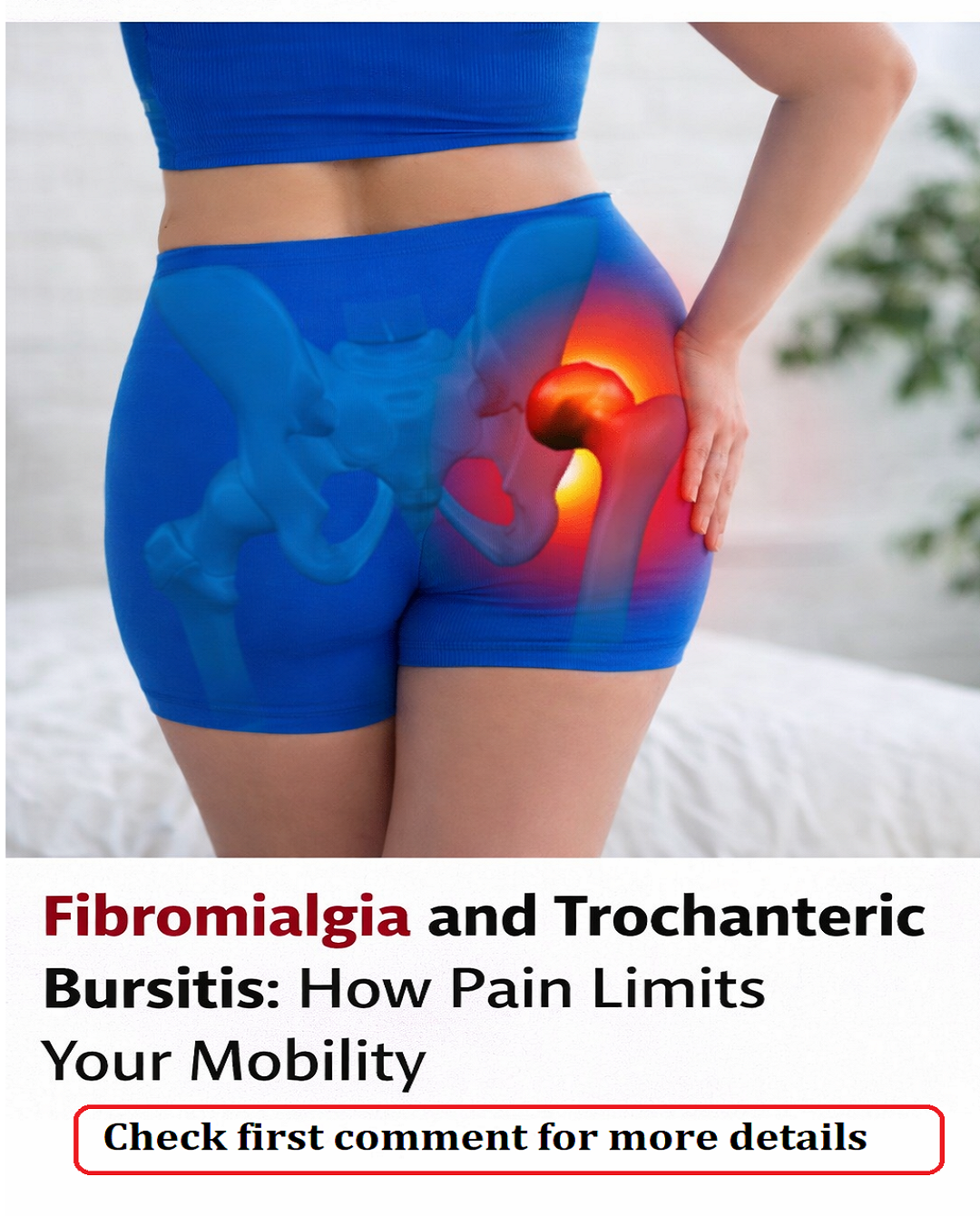
Fibromyalgia and trochanteric bursitis can coexist, and when this happens, the pain tends to be even more intense and limiting. While fibromyalgia involves a central modulation of pain, trochanteric bursitis is an inflammation of the bursae located on the lateral of the hip, a region known as the greater trochanter. The association of the two conditions enhances discomfort and significantly reduces mobility.
In trochanteric bursitis, the pain usually focuses on the lateral of the hip, can radiate to the thigh, and in some cases, even to the knee. Activities such as walking, climbing stairs, getting up from a chair, lying on the side, or standing for long periods become painful. In people with fibromyalgia, this localized pain is perceived in an amplified, more persistent, and harder to relieve manner.
Fibromyalgia also contributes to muscle stiffness, fatigue, and hypersensitivity to touch, which causes simple movements to provoke intense pain. The muscles around the hip can enter constant tension as a protective mechanism, reducing the range of motion and altering posture and gait. As a result, compensations arise that overburden other regions, such as the lower back, knees, and legs.
Sleeping also becomes a challenge. Lying on the side affected by bursitis can be extremely painful, and the lack of sleep further exacerbates the symptoms of fibromyalgia, creating a cycle of pain, fatigue, and functional limitation.
When fibromyalgia and trochanteric bursitis are present, it is essential to recognize that the pain is not an exaggeration or a lack of physical conditioning. It is a combination of peripherally inflamed pain with a sensitized nervous system, requiring careful, individualized, and respectful management to preserve movement and quality of life.
Leg pain is a common and frustrating symptom for many people living with fibromyalgia. It may not feel like a simple muscle ache. Instead, the legs can burn, throb, tingle, feel unusually heavy, or become painful after activities that normally would not cause significant discomfort.
Some people describe their legs as feeling as though they are “on fire.” Others say their calves feel tight, their feet hurt after standing, or their entire legs feel exhausted even after getting plenty of rest. The discomfort may come and go, move from one area to another, or become more noticeable at particular times of the day.
Understanding fibromyalgia leg pain starts with understanding how fibromyalgia affects the nervous system. The condition is associated with changes in the way the brain and spinal cord process pain and other sensory signals. This process, often referred to as central sensitization, can make ordinary sensations feel unusually painful or irritating.
Fatigue, poor-quality sleep, physical activity, stress, and prolonged periods in one position may further intensify symptoms.
What Does Fibromyalgia Leg Pain Feel Like?
Fibromyalgia leg pain can be difficult to describe because it does not have one specific sensation. The experience varies from person to person and can even change from day to day.
Common descriptions include:
- Burning or hot sensations in the legs
- Deep muscle aching
- Throbbing or pulsing discomfort
- Tingling or “pins and needles”
- Muscle tenderness
- Tight or stiff calves
- Heavy or tired legs
- Weak-feeling legs
- Increased sensitivity when muscles are touched
- Pain after walking or standing
- Discomfort that becomes worse after prolonged sitting
- Aching in the thighs, calves, knees, ankles, or feet
For some people, the pain is relatively mild but persistent. For others, it can become severe during a fibromyalgia flare-up.
The discomfort may also appear without an obvious injury. A person might wake up with painful legs, experience burning after a normal day of activity, or notice worsening symptoms after spending several hours sitting.
This unpredictability can make fibromyalgia leg pain particularly difficult to manage.
Can Fibromyalgia Cause Burning Legs?
Yes, some people with fibromyalgia report burning sensations in their legs.
A burning sensation does not necessarily mean that the muscles are literally overheated or inflamed. Instead, changes in nervous-system processing can influence how sensations are interpreted.
When sensory signals are amplified, relatively ordinary information coming from muscles and surrounding tissues may be perceived as painful, uncomfortable, or unusually intense.
The sensation can occur in different locations, including the:
- Thighs
- Calves
- Knees
- Ankles
- Feet
Some people notice burning on both sides of the body, while others experience it more prominently in one area.
However, burning legs should not automatically be attributed to fibromyalgia. Other conditions can cause burning, tingling, numbness, or weakness in the legs. Persistent or unexplained symptoms deserve medical evaluation, particularly when they are new or significantly different from a person’s usual fibromyalgia symptoms.
Why Does Fibromyalgia Cause Leg Pain?
One important explanation involves central sensitization.
Normally, the nervous system receives information from different parts of the body and helps the brain determine whether a sensation represents pressure, movement, temperature, or potential injury. In fibromyalgia, pain processing can become altered.
The nervous system may become more sensitive to sensory input. As a result, signals that might ordinarily be interpreted as minor or neutral can produce a stronger pain response.
This does not mean the pain is imaginary. The pain is real; the problem is related to how sensory information is processed.
Central Sensitization and Fibromyalgia Muscle Pain
Central sensitization is frequently discussed in connection with chronic widespread pain.
Imagine that the nervous system has a volume control for sensory information. When the system is highly sensitive, that volume may effectively be turned up. A relatively small amount of physical stimulation can therefore feel much more uncomfortable than expected.
This may help explain why activities such as walking, climbing stairs, exercising, or standing for a long time can sometimes trigger fibromyalgia muscle pain.
It may also explain why pressure from clothing, massage, or simply touching a sensitive area can occasionally be uncomfortable.
The legs contain many muscles and are involved in almost every movement during the day. Consequently, they can become a noticeable source of discomfort for someone with widespread pain.
Fibromyalgia Calf Pain and Heavy Legs
The calves can be especially uncomfortable because they are constantly involved in walking, standing, balancing, and other daily movements.
Fibromyalgia calf pain may feel like a deep ache, tightness, burning, cramping, or unusual fatigue. Some people describe their calves as though they have completed a strenuous workout even when they have only performed ordinary activities.
Heavy legs can be another frustrating symptom.
A person may feel as though their legs are difficult to move or that they are carrying extra weight. This sensation does not necessarily mean that the muscles are damaged. Instead, fatigue, pain sensitivity, poor sleep, and physical deconditioning may all contribute to the experience.
The feeling can become more noticeable after:
- Long periods of standing
- Walking longer than usual
- Household chores
- Shopping
- Exercise
- Sitting in one position
- A poor night’s sleep
- A stressful day
Recognizing personal triggers can be useful because fibromyalgia symptoms often fluctuate rather than remaining constant.
Fibromyalgia Leg Pain and Poor Sleep
Sleep plays an important role in how the body handles pain.
Many people with fibromyalgia experience sleep that is interrupted or not sufficiently restorative. Even after spending many hours in bed, a person may wake feeling tired rather than refreshed.
Poor-quality sleep can make pain harder to tolerate during the following day. It can also contribute to fatigue, reduced concentration, mood changes, and lower physical endurance.
This creates a difficult cycle:
Poor sleep → increased fatigue → greater sensitivity to physical activity → more discomfort → difficulty relaxing or sleeping → poor sleep again.
For someone experiencing fibromyalgia leg pain, this cycle can make the legs feel particularly exhausted.
A day that involves relatively little physical activity may still be followed by aching or heaviness. Likewise, an unusually active day can cause symptoms to become more noticeable later.
Improving sleep quality is therefore an important part of managing the overall symptom burden, although sleep problems themselves may require individualized medical attention.
Can Fibromyalgia Cause Foot and Leg Pain?
Fibromyalgia can involve pain in many parts of the body, including the feet.
Fibromyalgia foot pain may present as aching, tenderness, burning, tingling, or sensitivity when standing or walking. Some people notice discomfort in the soles or around the ankles, while others experience pain throughout the lower legs.
Because the feet support the body during standing and walking, even mild sensitivity can become frustrating when it persists throughout the day.
However, foot and leg symptoms have many possible causes. Plantar fascia problems, nerve disorders, circulation problems, vitamin deficiencies, diabetes, medication effects, and other conditions can produce symptoms that resemble those associated with fibromyalgia.
This is one reason it is important not to assume that every new sensation is automatically caused by fibromyalgia.
Why Does Leg Pain Get Worse After Activity?
Physical activity can have complicated effects on fibromyalgia.
Gentle movement may be helpful for many people, while doing too much too quickly can aggravate symptoms.
For example, someone who feels relatively good may decide to complete several household tasks, take a long walk, or perform a demanding workout. The immediate activity may feel manageable, but increased pain and fatigue can appear later.
This is sometimes described as a post-activity flare.
The answer is not necessarily to avoid movement altogether. Long-term inactivity can reduce strength and physical conditioning, potentially making ordinary activities more difficult.
Instead, many people benefit from pacing.
Pacing means balancing activity with recovery rather than repeatedly pushing through severe symptoms and then needing prolonged rest.
A practical approach might include:
- Breaking large tasks into smaller activities
- Taking short rest periods
- Increasing exercise gradually
- Avoiding sudden changes in activity levels
- Paying attention to early warning signs
- Alternating demanding and easier tasks
- Allowing adequate recovery after unusual physical exertion
The right activity level is different for everyone.
Fibromyalgia Leg Pain During the Night
Some people notice more leg discomfort at night.
When the environment becomes quiet and there are fewer distractions, pain may become more noticeable. At the same time, tired muscles and accumulated physical activity from the day may contribute to discomfort.
Nighttime leg symptoms can include burning, aching, restlessness, tightness, or an uncomfortable urge to move.
It is important to distinguish these symptoms from other conditions that can cause nighttime leg discomfort. For example, restless legs syndrome, peripheral neuropathy, medication effects, and circulation problems can produce symptoms that overlap with fibromyalgia.
If nighttime symptoms regularly interfere with sleep, discussing them with a healthcare professional can help identify the most appropriate explanation and treatment.
How to Manage Fibromyalgia Leg Pain
There is no single solution that eliminates leg pain for everyone with fibromyalgia. Management usually involves addressing several factors rather than focusing exclusively on the painful area.
Gentle Movement
Low-impact movement can help maintain mobility and physical conditioning.
Depending on individual ability, options may include gentle walking, stretching, water-based exercise, or other low-impact activities.
Starting slowly is important. A small amount of consistent activity may be more sustainable than occasional intense exercise.
Heat
Some people find warmth soothing for muscle discomfort. A warm shower, bath, heating pad, or other safe heat application may temporarily reduce the sensation of tightness or aching.
Heat should be used carefully to avoid burns, especially when sensation is reduced.
Stretching
Gentle stretching may help with feelings of stiffness and muscle tension.
Stretching should not be forced. Sharp or significant pain is a reason to stop rather than push through the movement.
Sleep Routine
A consistent sleep schedule may support better sleep quality.
Helpful habits can include keeping regular sleep and wake times, reducing stimulating activities close to bedtime, and creating a comfortable sleeping environment.
People with persistent sleep problems should discuss them with a healthcare professional.
Stress Management
Stress can influence pain perception and may contribute to symptom flares.
Relaxation exercises, breathing techniques, mindfulness, enjoyable hobbies, and appropriate psychological support may help some people manage the broader impact of chronic pain.
Medical Treatment
Depending on the individual’s symptoms and medical history, healthcare professionals may recommend medications, physical therapy, exercise programs, psychological therapies, or other approaches.
Treatment should be individualized rather than based solely on symptoms found online.
When Should Leg Pain Be Checked by a Doctor?
Although leg pain can occur with fibromyalgia, new or unusual symptoms should not automatically be blamed on the condition.
Medical attention is particularly important when leg pain occurs with symptoms such as:
- Sudden or severe swelling
- Significant redness or warmth in one leg
- New or progressive weakness
- Loss of sensation
- Difficulty walking
- A new injury
- Severe unexplained pain
- Changes in skin color or temperature
- Chest pain or difficulty breathing alongside leg swelling
These symptoms can have causes unrelated to fibromyalgia and may require prompt evaluation.
Similarly, persistent burning or tingling should be assessed if it is new, progressively worsening, or accompanied by numbness or weakness.
The Bottom Line: Understanding Fibromyalgia Leg Pain
Fibromyalgia leg pain can take many forms. Burning, aching, tingling, heaviness, stiffness, and muscle tenderness are among the sensations people may experience.
The symptoms can be related to altered pain processing and increased sensitivity within the nervous system. Central sensitization provides one important framework for understanding why ordinary physical sensations may sometimes feel disproportionately painful.
Fatigue and poor-quality sleep can make the experience even more difficult. Physical activity, prolonged sitting or standing, stress, and changes in routine may also influence symptom severity.
Most importantly, fibromyalgia does not mean that every episode of leg pain should automatically be dismissed as part of the condition. New, severe, or unusual symptoms deserve appropriate medical assessment.
For people living with fibromyalgia, understanding personal triggers, pacing physical activity, maintaining appropriate movement, supporting healthy sleep, and working with a healthcare professional can all be important parts of managing leg discomfort.
Leg pain can be frustrating, but understanding why it happens may make the symptom less mysterious—and can help you make more informed decisions about managing it.