Have you ever felt a strange ache around your collarbone and wondered, “Why does my collarbone hurt when I haven’t injured it?” Maybe the pain feels deep, tender, burning, or difficult to pinpoint. Sometimes it seems to spread toward the shoulder, neck, upper chest, or arm.
While collarbone pain can have many possible causes, people living with fibromyalgia may experience pain in areas around the shoulders, chest, neck, and upper body as part of their broader pain pattern.
Fibromyalgia is a chronic condition associated with widespread pain, tenderness, fatigue, sleep problems, and increased sensitivity to pain. Researchers believe that changes in how the nervous system processes pain may contribute to the symptoms.
That does not mean every case of collarbone pain is caused by fibromyalgia. A painful collarbone can also result from an injury, muscle strain, joint problems, inflammation, nerve irritation, or other medical conditions. In some situations, pain near the collarbone or upper chest can even represent an emergency.
So how can you tell when collarbone pain may be connected to fibromyalgia? And when should you have it checked?
What Does Fibromyalgia Collarbone Pain Feel Like?
Fibromyalgia does not necessarily cause pain in one specific location. Instead, people may experience pain across multiple parts of the body. The National Institute of Arthritis and Musculoskeletal and Skin Diseases (NIAMS) describes fibromyalgia pain as potentially affecting areas including the arms, legs, head, chest, abdomen, back, and buttocks. The pain may feel aching, burning, or throbbing.
Because the collarbone sits between the breastbone and shoulder, discomfort in this region can sometimes feel like shoulder pain, upper chest pain, neck pain, or clavicle pain rather than pain coming directly from the bone.
People with fibromyalgia may describe the sensation in different ways, including:
- A dull ache around the collarbone
- Tenderness when touching the area
- Burning or uncomfortable sensations
- A deep aching feeling
- Pain extending into the shoulder
- Tightness across the upper chest
- Discomfort around the neck and upper back
- Pain that seems to move from one area to another
- Increased sensitivity after physical activity
- Pain that becomes more noticeable during a fibromyalgia flare
The important point is that fibromyalgia pain is often widespread rather than isolated. If collarbone discomfort occurs alongside pain in several other areas, fatigue, unrefreshing sleep, or cognitive problems such as “fibro fog,” it may be worth discussing the overall symptom pattern with a healthcare professional.
Fibromyalgia can involve abnormal pain processing, meaning the nervous system may respond more strongly to sensations that might not produce the same level of pain in another person.
Why Can Fibromyalgia Make the Area Hurt?
The exact cause of fibromyalgia is still not fully understood. However, research suggests that people with fibromyalgia can have altered signaling in neural pathways involved in transmitting and processing pain.
This is important because pain does not always mean that a bone or joint has been damaged.
In other words, pain is real even when there is no obvious structural injury.
Someone with fibromyalgia might therefore experience significant tenderness around the upper chest, shoulders, neck, or nearby muscles without having a fracture or another obvious injury in the collarbone itself.
This is one reason fibromyalgia can be difficult to recognize. A person may have repeated pain but normal-looking imaging or no obvious explanation for every painful spot.
Collarbone Pain vs. Other Causes: What Else Could It Be?
Although fibromyalgia can be associated with widespread pain, it should not automatically be blamed for new collarbone pain.
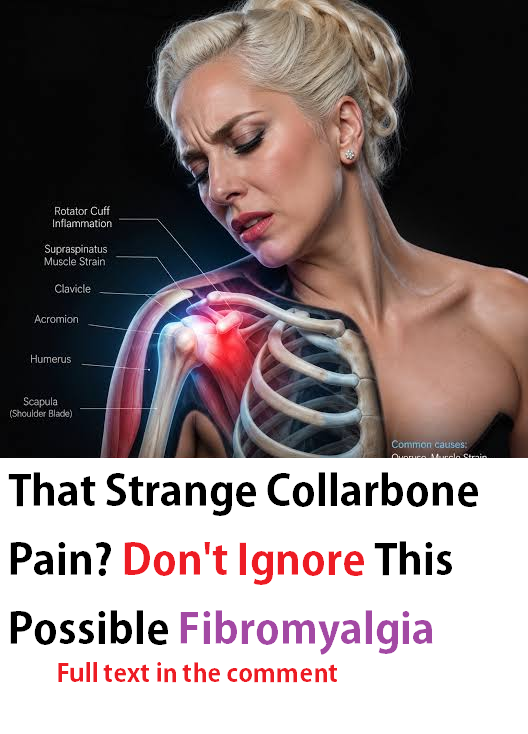
The collarbone, medically known as the clavicle, connects the breastbone to the shoulder blade. Problems affecting the bone, nearby joints, muscles, tendons, nerves, or chest can all produce pain in this general area.
For example, a broken collarbone can cause significant pain, swelling, tenderness, bruising, difficulty moving the shoulder, or a visible bump near the injury. Falls, sports injuries, and vehicle accidents are common causes.
Other possible causes of pain around the collarbone or shoulder include:
- Muscle strain
- Shoulder injury
- Rotator cuff problems
- Tendinitis
- Bursitis
- Arthritis
- Cervical nerve irritation
- A separated shoulder
- Costochondritis
- Joint inflammation
- Referred pain from another part of the body
Shoulder pain can also sometimes be referred from the neck, chest, or other areas rather than originating directly inside the shoulder joint.
Costochondritis and Upper Chest Pain
Another condition that can sometimes be confused with fibromyalgia pain is costochondritis, an inflammation involving the cartilage connecting the ribs to the breastbone.
Costochondritis can cause sharp, aching, or pressure-like pain and may radiate toward the shoulders or arms. The discomfort can become worse with deep breathing, coughing, sneezing, or movement of the chest wall.
This is why persistent or unexplained pain around the collarbone and upper chest deserves attention rather than being automatically labeled a “fibromyalgia symptom.”
Could Collarbone Pain Be Part of a Fibromyalgia Flare?
For someone who already has fibromyalgia, collarbone or shoulder-area discomfort may become more noticeable during periods when other symptoms are also worsening.
A fibromyalgia flare can involve an increase in pain, fatigue, sleep problems, and sensitivity. Triggers vary from person to person. Stress, poor sleep, physical overexertion, illness, and other factors may contribute to worsening symptoms.
One useful clue is the overall pattern.
For example, suppose your collarbone begins aching at the same time that you notice:
- More widespread muscle pain
- Increased tenderness
- Severe fatigue
- Poor-quality sleep
- Brain fog
- Neck and shoulder stiffness
- Headaches
- Increased sensitivity to touch
- Pain in multiple areas of the body
That broader pattern may be more consistent with the way fibromyalgia affects the body than an isolated collarbone problem.
The CDC notes that common fibromyalgia symptoms include widespread pain and stiffness, fatigue, sleep problems, and difficulties with thinking or concentration. Tingling, numbness, headaches, and digestive symptoms can also occur.
Still, symptoms can overlap with many other conditions. That is why the location of pain alone cannot diagnose fibromyalgia.
How Is Fibromyalgia Diagnosed?
There is no single blood test, X-ray, or scan that can independently confirm fibromyalgia.
According to NIAMS, doctors generally diagnose fibromyalgia based on the person’s symptoms, medical history, and physical examination while considering and ruling out other possible causes of the symptoms. Laboratory or imaging tests may be used when needed to investigate other conditions.
A doctor may ask questions such as:
- Where do you experience pain?
- How long has the pain been present?
- Is the pain widespread?
- Do you experience fatigue?
- Do you wake feeling unrefreshed?
- Are you having trouble concentrating or remembering things?
- Does physical activity make symptoms worse?
- Have you experienced an injury?
- Do you have swelling, redness, weakness, or restricted movement?
- Do you have other medical conditions?
Current diagnostic approaches focus on the overall pattern of widespread pain and accompanying symptoms rather than simply looking for a particular painful “trigger point.”
Mayo Clinic describes fibromyalgia diagnosis as involving widespread pain lasting at least three months, with pain occurring across multiple regions of the body.
That means collarbone pain alone does not establish a diagnosis of fibromyalgia.
Instead, healthcare professionals look at the bigger picture.
What Can Help Fibromyalgia-Related Collarbone and Shoulder Pain?
Treatment for fibromyalgia generally focuses on managing symptoms and improving daily function rather than treating damage to the collarbone.
NIAMS recommends a combination of approaches that may include physical activity or movement therapies, psychological or behavioral therapies, medications when appropriate, and self-management strategies.
Gentle Movement
When pain is present, it can be tempting to stop moving completely. However, regular, appropriate physical activity is an important part of fibromyalgia management.
Low-impact activities such as walking, swimming, water exercise, gentle stretching, yoga, or tai chi may be useful for some people.
The key is to start gradually rather than suddenly increasing activity.
If shoulder or collarbone pain is new, severe, or clearly connected to an injury, it is better to have the cause evaluated before beginning exercises involving the painful area.
Pay Attention to Sleep
Poor sleep and fibromyalgia often go hand in hand. Improving sleep habits may help reduce the overall burden of symptoms.
Keeping a consistent sleep schedule, creating a comfortable sleep environment, and developing a relaxing bedtime routine can be useful components of symptom management.
Pace Physical Activity
Doing too much on a good day can sometimes leave someone feeling significantly worse afterward.
Pacing means balancing activity with rest rather than repeatedly pushing through severe symptoms.
If you notice that cleaning, lifting, exercising, or carrying heavy objects consistently increases your shoulder and collarbone pain, discuss the pattern with your healthcare professional.
Medical Treatment
Depending on your symptoms and medical history, a healthcare professional may recommend medications or other therapies.
Fibromyalgia treatment can involve different approaches, and treatment plans are individualized. NIAMS notes that certain medications may help with pain or sleep, while behavioral therapies and movement-based approaches can also be part of care.
Do not start, stop, or change prescription medication without discussing it with your healthcare professional.
When Should Collarbone Pain Be Checked Urgently?
This is one of the most important parts of understanding collarbone pain.
Even if you have already been diagnosed with fibromyalgia, new or unusual pain should not automatically be blamed on fibromyalgia.
Seek urgent medical attention if collarbone or upper chest pain occurs after a significant fall, accident, or direct blow, especially if there is swelling, bruising, deformity, or difficulty moving the arm. A broken collarbone can require prompt medical evaluation.
More importantly, chest or upper-body pain accompanied by emergency symptoms should be treated as an emergency.
A heart attack can cause pressure, tightness, squeezing, aching, or discomfort in the chest that may spread toward the shoulder, arm, back, neck, or jaw. Shortness of breath, sweating, nausea, dizziness, or fainting can also occur.
If you experience sudden or unexplained chest pain, particularly with breathing difficulty, sweating, fainting, or pain spreading into the arm, neck, jaw, or back, seek emergency medical care rather than assuming it is fibromyalgia.
The Bottom Line: Is Collarbone Pain a Fibromyalgia Symptom?
It can be associated with the broader pain pattern of fibromyalgia, but collarbone pain by itself does not mean you have fibromyalgia.
Fibromyalgia causes widespread pain and increased sensitivity to pain, and symptoms can involve the shoulders, chest, neck, arms, and other parts of the body.
If your collarbone pain appears alongside widespread body pain, fatigue, sleep problems, tenderness, and brain fog, it may be worth discussing fibromyalgia with your doctor.
But if the pain is new, severe, localized, follows an injury, causes visible swelling or deformity, or occurs together with chest pressure or breathing problems, other causes need to be considered first.
Your pain deserves attention—even when there is no obvious injury.
Fibromyalgia can make ordinary sensations feel surprisingly painful, but not every painful sensation is fibromyalgia. The safest approach is to look at the complete symptom pattern and get appropriate medical evaluation when something feels different or concerning.