Have you ever felt a burning, stabbing, or electric-like pain traveling from your lower back into your buttock and down your leg—and wondered why it hurts so much? If you live with fibromyalgia, this type of pain can be particularly confusing. You may already deal with widespread muscle pain, fatigue, tenderness, and sensitivity, so when severe leg or lower-back pain appears, it can be difficult to know whether it is another fibromyalgia symptom or something different.
This is where fibromyalgia and sciatica can become especially challenging.
Fibromyalgia is associated with widespread pain and increased sensitivity to painful sensations. Sciatica, on the other hand, usually refers to pain following the path of the sciatic nerve, commonly from the lower back or buttock down the back of the leg. Sciatica is often related to irritation or compression of a nerve root in the lower spine.
Although the two conditions can produce some overlapping symptoms, they are not the same thing. Understanding the difference can help you recognize patterns in your pain and know when medical evaluation may be necessary.
What Is Fibromyalgia and Why Can It Cause So Much Pain?
Fibromyalgia is a chronic condition characterized by widespread pain, tenderness, fatigue, and sleep problems. People with fibromyalgia can experience pain in many areas, including the back, hips, buttocks, arms, and legs. Some people describe their pain as aching, burning, throbbing, or unusually sensitive to touch.
One important feature of fibromyalgia is that the nervous system appears to process pain differently. Research indicates that people with fibromyalgia have increased sensitivity to pain, with changes in neural pathways involved in transmitting and processing pain signals.
That can make an ordinary sensation feel much more intense.
Imagine your body’s pain alarm system as a smoke detector. In a healthy system, the alarm generally becomes louder when there is a significant threat. With altered pain processing, the alarm may become unusually sensitive. The result can be pain that feels overwhelming even when there is no obvious injury to the muscles or joints.
This does not mean the pain is imaginary.
Fibromyalgia pain is real, even when routine scans do not reveal a structural cause for every painful area.
Fibromyalgia can also occur alongside other conditions. NIAMS notes that people with fibromyalgia may also have conditions that cause chronic pain, including chronic back pain and other musculoskeletal disorders.
That distinction becomes particularly important when someone with fibromyalgia develops symptoms that strongly resemble sciatica.
What Does Sciatica Feel Like?
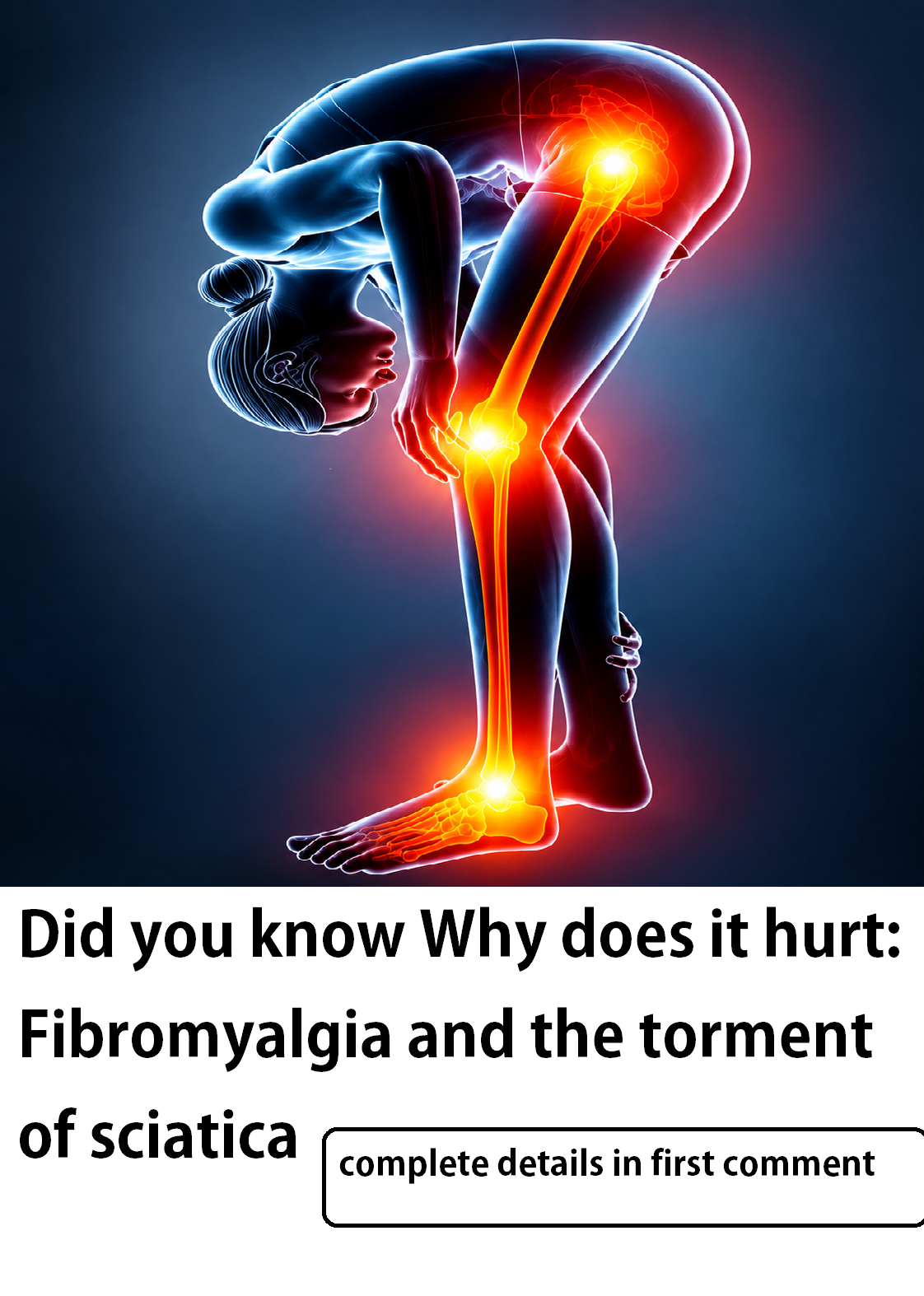
Sciatica is nerve-related pain that follows the pathway of the sciatic nerve. The sciatic nerve originates from nerve roots in the lower spine and travels through the buttocks and down each leg. When one of these nerve roots becomes irritated or compressed, pain can travel along this pathway.
Unlike general muscle soreness, sciatica often has a distinctive quality.
You might experience:
- Sharp pain in the lower back or buttock
- Burning pain traveling down the leg
- Electric-shock-like sensations
- Tingling or pins and needles
- Numbness
- Leg or foot weakness
- Pain extending toward the calf or foot
- Symptoms that become worse with prolonged sitting
- Pain that increases with coughing or sneezing
Sciatica commonly affects one side of the body, although symptoms can vary.
One of the most common causes is a herniated disc in the lower spine. Other causes can include spinal stenosis, changes in the spine, spondylolisthesis, or certain injuries that irritate a nerve root.
This is why simply assuming that every shooting leg pain is “fibromyalgia pain” can be problematic.
Sometimes there may be another condition contributing to the symptoms.
Fibromyalgia vs. Sciatica: How Can You Tell the Difference?
The symptoms can overlap, but the pattern of pain may provide useful clues.
Fibromyalgia usually causes widespread pain. A person may experience discomfort in several parts of the body at the same time—such as the shoulders, arms, hips, back, legs, or other areas. Fatigue, poor sleep, tenderness, and cognitive difficulties can occur alongside the pain.
Sciatica is usually more localized and nerve-patterned.
For example, you may notice pain beginning around your lower back or buttock and then traveling down the back of one thigh and into the lower leg. Tingling, numbness, or weakness may accompany the pain.
Here is a simplified comparison:
| Fibromyalgia | Sciatica |
|---|---|
| Usually widespread pain | Usually follows a nerve pathway |
| Can affect multiple areas | Often affects one side |
| Aching, burning, throbbing, or tenderness | Sharp, burning, shooting, or electric-like pain |
| Fatigue is common | Fatigue is not a defining feature |
| Sleep problems commonly occur | Sleep may be disturbed because of pain |
| Pain sensitivity may be increased | Usually associated with nerve irritation/compression |
| May occur without a specific structural injury | Often has an identifiable spinal or nerve-related cause |
This comparison is only a guide. Symptoms can overlap, and only a healthcare professional can determine what is causing your particular pain.
Can Fibromyalgia Cause Sciatica?
This is an important question.
Fibromyalgia itself is not generally considered a structural cause of sciatica. Sciatica usually involves irritation or compression of a nerve root in the lower spine.
However, someone with fibromyalgia can also develop sciatica.
That matters because having fibromyalgia does not protect a person from developing a herniated disc, spinal stenosis, back injury, or another condition capable of irritating a spinal nerve.
There is also another layer to consider: fibromyalgia can make pain feel more intense.
If someone has both fibromyalgia and a nerve-related condition, the combination may be especially difficult to manage. The underlying nerve irritation may produce the shooting or radiating pain, while altered pain processing associated with fibromyalgia may contribute to greater overall pain sensitivity.
In other words, fibromyalgia and sciatica can coexist, and one does not automatically explain away the other.
Why Does Sciatica Feel So Severe With Fibromyalgia?
When you already live with chronic pain, a new pain signal can feel like adding another alarm to an already overloaded system.
Fibromyalgia involves increased sensitivity to pain, while sciatica involves irritation of nerves or nerve roots. These mechanisms are different, but the resulting experience can be extremely uncomfortable.
A person may describe the combination as:
“My whole body hurts, but this pain is different.”
That difference can be meaningful.
For example, widespread aching across your shoulders, hips, arms, and legs may fit the broader pattern of fibromyalgia. But if a new burning sensation starts in your lower back or buttock and repeatedly shoots down one leg, particularly with tingling, numbness, or weakness, it deserves medical attention.
Keeping a pain diary can be useful.
Write down:
- Where the pain begins
- Where it travels
- Whether it affects one or both sides
- Whether you experience numbness or tingling
- Whether sitting makes it worse
- Whether coughing or sneezing changes it
- How long each episode lasts
- Whether weakness develops
- What activities seem to trigger or reduce symptoms
This information can help a healthcare professional understand the pattern.
Fibromyalgia and Sciatica Treatment: What Can Help?
Treatment depends on what is actually causing the symptoms.
There is no single treatment that works for everyone with fibromyalgia. Fibromyalgia management may involve physical activity or movement therapy, behavioral approaches, sleep management, and medications when appropriate.
For sciatica, treatment may include staying active, gentle exercise, physical therapy, appropriate pain management, and addressing the underlying cause. Many cases improve over weeks to months, although some take longer.
Gentle Movement
When pain is severe, staying in bed can seem like the safest option. However, prolonged inactivity may not be helpful for many people with sciatica.
The NHS recommends continuing normal activities as much as possible and beginning gentle exercise when able.
For people with fibromyalgia, exercise can also be an important component of long-term symptom management. Low-impact activities such as walking, swimming, water exercise, yoga, or tai chi may be useful for some people, although activity should be increased gradually and tailored to individual ability.
The key is not to push through severe pain simply because you feel you “should.”
A physical therapist can help design an appropriate program, particularly when back and leg symptoms are involved.
Heat and Cold
Some people find temporary relief from heat packs or cold packs.
For acute sciatica, Mayo Clinic notes that cold packs may be useful initially, while heat may be helpful after the first few days.
However, individual responses vary. Because fibromyalgia can involve sensitivity to temperature, use a comfortable temperature and protect your skin from burns or excessive cold.
Medication
Medication decisions should be individualized.
Fibromyalgia may be treated with medications that target pain processing, improve sleep, or address particular symptoms. Examples include certain antidepressants and anti-seizure medications prescribed for pain.
Sciatica may be managed with different medications depending on the cause, severity, other medical conditions, and a person’s risk factors. Mayo Clinic lists several possible medication categories, including anti-inflammatory medicines and certain medicines used for nerve-related pain.
Do not assume that a medication that helped someone else will be appropriate for you. Discuss new medications, combinations, and long-term use with a doctor or pharmacist.
Physical Therapy
Physical therapy can be valuable when sciatica or chronic back pain is involved.
A therapist may work on posture, mobility, flexibility, strengthening, and ways to perform everyday movements with less strain. Mayo Clinic notes that physical therapy programs for sciatica can include exercises designed to improve range of motion, strengthen supporting muscles, and improve posture.
For someone with fibromyalgia, the exercise program may need to be introduced gradually to avoid excessive symptom flare-ups.
When Should You See a Doctor About Sciatica?
Not every episode of leg pain requires emergency treatment, but persistent, severe, worsening, or unusual symptoms should not simply be attributed to fibromyalgia.
Consider seeking medical advice if:
- Your leg pain is severe or worsening.
- Pain continues despite self-care.
- Pain interferes with walking or normal activities.
- You develop persistent numbness or tingling.
- You notice weakness in your leg or foot.
- The symptoms keep returning.
- The pain pattern is significantly different from your usual fibromyalgia symptoms.
A healthcare professional may perform a physical examination and, depending on your symptoms, may consider imaging or other tests. MRI can show structures such as herniated discs and areas affecting nerves, while other tests may sometimes be used when clinically appropriate.
Remember that fibromyalgia itself does not have one specific laboratory or imaging test. Doctors generally evaluate symptoms and medical history while considering and ruling out other possible causes of pain.
Warning Signs That Need Urgent Medical Attention
Some symptoms associated with sciatica can indicate a serious problem requiring urgent evaluation.
Seek emergency medical attention if you develop:
- Severe or worsening weakness or numbness in both legs
- Numbness around the genitals or anus
- Difficulty starting urination
- Inability to urinate
- Loss of bladder control
- Loss of bowel control
These symptoms can indicate serious compression of nerves in the lower spine and should not be dismissed as a fibromyalgia flare.
Living With Fibromyalgia and Sciatic Pain
Living with fibromyalgia can already require patience, planning, and constant adjustment. Adding sciatica or another source of nerve pain can make everyday activities feel even more difficult.
The most useful step is to avoid assuming that every new symptom is simply “part of fibromyalgia.”
Pay attention to changes.
Is the pain widespread or traveling along one leg? Is it aching or electric? Is there numbness? Does your foot feel weak? Does sitting make it worse? Has something changed from your normal pattern?
These details can help distinguish a familiar fibromyalgia flare from a new problem that deserves assessment.
Fibromyalgia is a legitimate chronic pain condition, and sciatica is a separate nerve-related pain problem. They can occur together, and understanding that difference can help you communicate more clearly with your healthcare team.
Final Thoughts
Did you know that severe leg pain in someone with fibromyalgia may not always be caused by fibromyalgia itself?
The torment of sciatica comes from irritation or compression involving nerves in the lower back, while fibromyalgia is associated with widespread pain and increased sensitivity to pain signals.
When both problems occur, the pain can feel particularly overwhelming.
The goal is not to diagnose yourself based on a list of symptoms. Instead, learn your usual fibromyalgia pain pattern, recognize when something feels different, and seek appropriate medical advice when new, persistent, severe, or neurological symptoms appear.
Your pain deserves to be taken seriously—even when there is no visible injury explaining every sensation.
Medical disclaimer: This article is for educational purposes only and is not a substitute for diagnosis or treatment from a qualified healthcare professional. If you have new or severe symptoms, particularly weakness, significant numbness, or bladder or bowel changes, seek medical care promptly.