Many people living with fibromyalgia experience a long list of symptoms—widespread pain, chronic fatigue, brain fog, and sensory hypersensitivity. But one symptom that often catches sufferers by surprise is loss of strength in the hands. This issue can make simple tasks like opening jars, carrying a mug, writing, holding a phone, or even gripping a steering wheel unexpectedly difficult.
Hand weakness can be scary because it affects independence, confidence, and daily functioning. But it’s also a misunderstood symptom, and many patients don’t realize it’s a common part of fibromyalgia’s complex physical changes.
In this detailed article, we’ll explore why fibromyalgia sufferers lose hand strength, how fatigue contributes to grip issues, what symptoms accompany this weakness, and how you can regain stability and function. By the end, you’ll have a clearer understanding of how fibromyalgia impacts the body and how to manage these changes naturally and effectively.
Understanding Hand Weakness in Fibromyalgia
While many fibromyalgia symptoms originate in the nervous system, hand weakness is a physical result of how the condition affects muscle tone, nerve signaling, sensory perception, and fatigue levels.
Hand weakness doesn’t always come from muscle damage. Instead, it often reflects:
-
disrupted nerve communication
-
sensory overload
-
muscular tension
-
chronic inflammation-like sensations
-
energy depletion
-
poor sleep quality
-
compromised pain tolerance
Because fibromyalgia affects how the brain processes pain and energy, even small motions may feel draining or painful. And when the nervous system is overwhelmed, grip strength decreases.
Why Is Grip Strength Affected?
Grip strength relies on three things:
-
Neurological control
-
Muscle strength and endurance
-
Stable joints
Fibromyalgia can interfere with all three.
Neurological control may falter because individuals with fibromyalgia often experience misfired or amplified signals within the brain and spinal cord. These misfires confuse the muscles responsible for gripping or lifting, causing weakness or clumsiness.
Muscle endurance, especially in the hands and forearms, decreases due to chronic pain and inactivity. People often instinctively avoid using painful body parts, leading to deconditioned muscles over time.
Joint stability, especially in the fingers and wrists, may be compromised when swelling, stiffness, or tenderness occurs. Combined, these issues make hand weakness a common and significant part of the fibromyalgia experience.
Symptoms That Often Accompany Hand Weakness
Hand weakness rarely happens alone. Many people report symptoms that form a “cluster,” making everyday tasks more difficult. Some of the most common symptoms include:
1. Tingling or Numbness
Many individuals feel pins and needles in the hands or fingers. This can stem from nerve sensitivity, circulation changes, or even secondary issues like carpal tunnel syndrome.
2. Cold Sensitivity
Hands may feel icy, stiff, or slow to move. Temperature regulation problems are very common with fibromyalgia.
3. Swelling Sensations
Some sufferers describe their hands as swollen even when they look normal. This sensation often increases pain and reduces dexterity.
4. Muscle Stiffness
Fibromyalgia frequently causes morning stiffness or stiffness after long periods of inactivity, which may limit range of motion.
5. Difficulty Holding Objects
Dropping items, shaky hands, or losing grip strength can occur without warning.
6. Fatigue-related Weakness
This ties directly into Fatigue and Fibromyalgia, where the body’s energy systems struggle to stay regulated.
These symptoms can vary daily. Some days your hands may feel almost normal, while other days even buttoning a shirt feels impossible.
How Fatigue and Fibromyalgia Affect Hand Strength
To understand why hand weakness is so common, you must recognize the deep connection between fatigue and fibromyalgia.
Chronic fibromyalgia fatigue is not ordinary tiredness. It is:
-
draining
-
persistent
-
physical and mental
-
often unpredictable
This type of fatigue reduces muscular endurance, interferes with nerve function, and makes even minor tasks difficult.
Here’s how fatigue contributes to hand weakness:
1. Energy Depletion
The muscles in the hands require continuous micro-bursts of energy to maintain grip. When energy levels are low, grip strength collapses.
2. Delayed Muscle Recovery
Hands and wrists do not recover well when sleep quality is poor—something nearly all fibromyalgia patients struggle with.
3. Nerve Sensitivity
Fatigue heightens nerve pain and sensory overload. A tired nervous system sends weaker or inconsistent signals to the muscles.
4. Cognitive Fatigue
Brain fog can make hand coordination clumsy, slow, or inaccurate.
This profound connection between fatigue and hand weakness is one reason patients frequently notice symptoms getting worse on days when exhaustion is severe.
Physical Causes of Hand Weakness in Fibromyalgia
While fibromyalgia does not damage the muscles permanently, it does create physical conditions that reduce strength.
1. Trigger Points
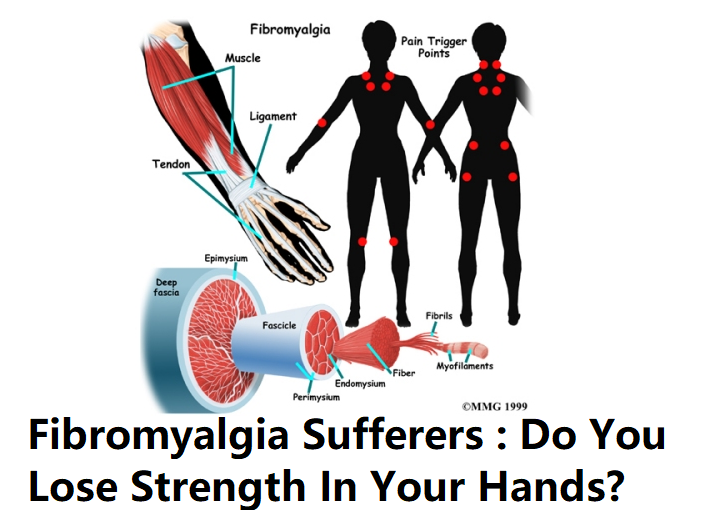
Fibromyalgia trigger points in the neck, shoulders, upper back, and forearms can radiate pain down the arms into the hands. This reduces grip strength and causes mobility problems.
2. Muscle Stiffness and Tension
Persistent stiffness in the forearms or hands restricts movement. Over time, this tension can create a cycle of reduced use and reduced strength.
3. Reduced Blood Flow
Some individuals experience compromised microcirculation, making muscles tire easily and feel weak or shaky.
4. Joint Tenderness
Fibromyalgia can cause joint tenderness without inflammation. The wrists, fingers, and knuckles may feel sore, making it difficult to grip.
5. Nerve Sensitivity
Heightened nerve activity may create painful sensations during normal hand movements.
Each of these factors plays a role in weakening hand function, making the symptom more common—and more frustrating—than most people realize.
Daily Activities That Become Challenging
Even small tasks demand a surprising amount of hand strength. Fibromyalgia sufferers often struggle with:
-
opening lids or jars
-
lifting grocery bags
-
holding pots or pans
-
typing for long periods
-
gripping steering wheels
-
washing clothes
-
folding laundry
-
writing or using touchscreens
-
brushing hair
-
buttoning shirts
This can make even the most basic routines overwhelming, contributing to emotional frustration and reduced independence.
How to Improve Hand Strength When You Have Fibromyalgia
While hand weakness is common, it is not permanent—and there are many ways to improve strength, dexterity, and comfort.
1. Hand and Finger Exercises
Gentle exercises help keep muscles active without overexerting them. Examples include:
-
finger stretches
-
wrist rotations
-
squeezing stress balls
-
hand yoga
-
tendon-gliding techniques
Consistency matters more than intensity.
2. Heat Therapy
Warm compresses increase circulation and relax stiff muscles. Warm water therapy, paraffin wax dips, and heating pads work well.
3. Massage and Myofascial Release
Hand and forearm massage can reduce muscle tension and improve flexibility.
4. Improve Sleep Quality
Addressing sleep problems automatically improves fatigue and, in turn, hand strength.
5. Magnesium and Vitamin Support
Magnesium can help reduce muscle tension. Vitamin D and B-complex vitamins may support nerve health and reduce fatigue.
6. Use Assistive Devices
There are tools designed to help with opening bottles, gripping objects, and reducing strain during daily tasks.
7. Reduce Inflammation-Inducing Foods
Some people notice improvement after reducing sugar, processed foods, and gluten. Anti-inflammatory diets support muscle function.
8. Stay Hydrated
Dehydration increases muscle cramping and stiffness, worsening weakness.
9. Address Trigger Points
Physical therapy, dry needling, and stretching can relieve radiating pain that affects hand strength.
10. Strength Training
Light, controlled resistance exercises improve hand and forearm strength over time.
The key is gentle consistency—not pushing the muscles to the point of exhaustion.
When Should You Worry About Hand Weakness?
Some hand weakness is expected with fibromyalgia, but certain signs may indicate an additional condition that needs attention:
-
sudden or extreme weakness
-
symptoms only on one side of the body
-
persistent swelling or redness
-
severe numbness or tingling
-
inability to hold objects at all
-
sharp burning pain
-
symptoms that worsen rapidly
Conditions that may coexist with fibromyalgia include:
-
carpal tunnel syndrome
-
rheumatoid arthritis
-
osteoarthritis
-
neuropathy
-
thyroid disorders
-
vitamin deficiencies
Speak with a healthcare provider if symptoms change unexpectedly or interfere significantly with daily life.
Managing the Emotional Side of Hand Weakness
Struggling with hand strength affects more than physical ability. It can influence emotional wellbeing as well.
Many people feel:
-
embarrassed about dropping things
-
frustrated during tasks
-
anxious about their independence
-
misunderstood by others
-
stressed by unpredictable symptoms
Being open with loved ones and seeking support from fibromyalgia groups can provide emotional relief. You’re not alone—millions experience the same struggle, and acknowledging it is a major step toward managing it.
Conclusion
Hand weakness is a very real and very common symptom among fibromyalgia sufferers. It stems from a combination of neurological changes, muscle stiffness, sensory sensitivity, circulation challenges, and the overwhelming connection between Fatigue and Fibromyalgia.
While it can significantly disrupt daily activities, the good news is that hand weakness is manageable. Through gentle exercises, improved sleep, trigger-point management, nutrition, and supportive therapies, many people regain strength, function, and confidence in their hands.
Understanding why hand weakness happens empowers you to take control of your symptoms and move toward a more comfortable, capable lifestyle despite the challenges of fibromyalgia.