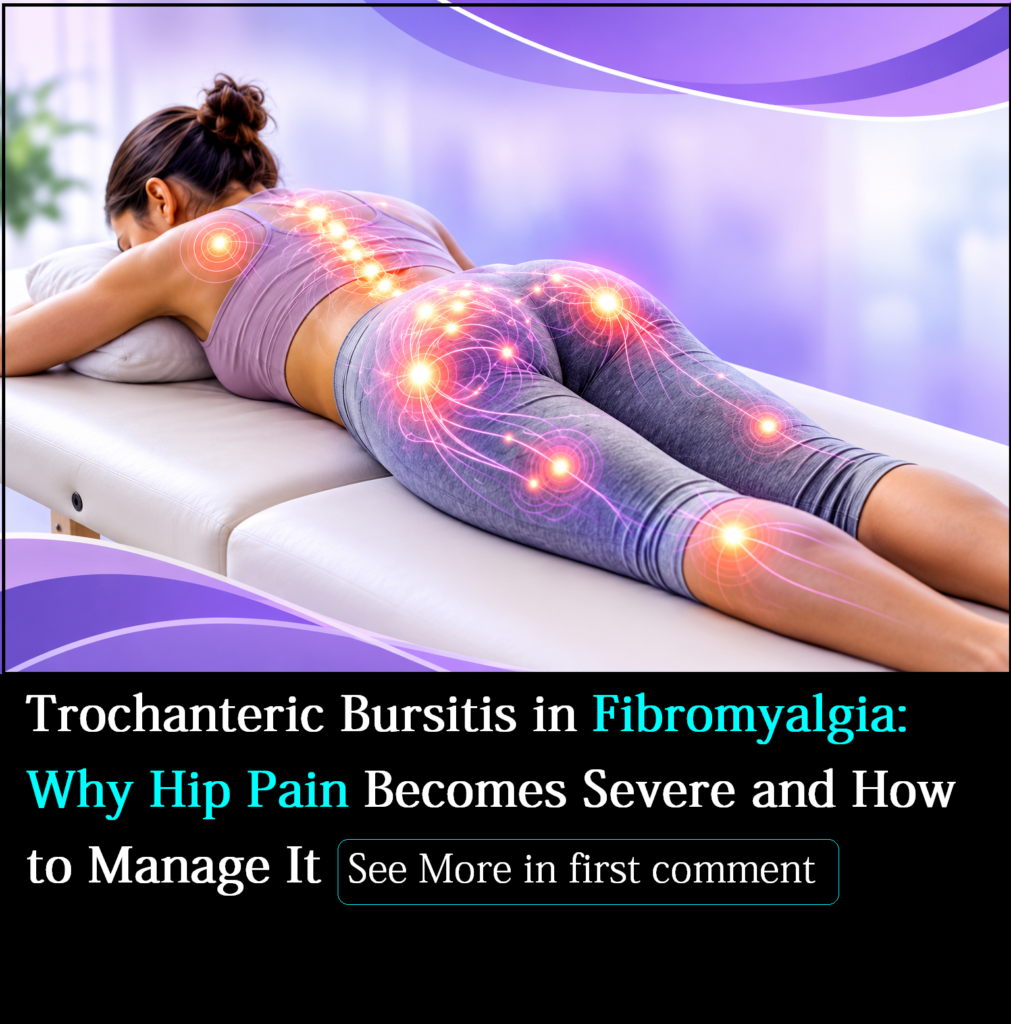
1. Diffuse musculoskeletal pain (widespread pain)
Is the central symptom of Fibromyalgia. Pain spreads across multiple regions of the body at once, and can be described as burning, weight, prickling or deep, persistent pain with no apparent injury.
2. Palpation pain points (tender points)
These are specific areas of the body that are extremely sensitive to touch or light pressure. Even gentle stimulation can cause intense pain, due to the amplification of pain by the nervous system.
3. Migraine
Frequent outbreaks of intense headaches, usually pulsating, that can be accompanied by nausea, sensitivity to light, sounds and smells. It is related to neurosensory hypersensitivity.
4. Cervicalgia ( pain in the neck )
Constant or recurring pain in the cervical region, with stiffness, sensation of weight, and limitation of movement, radiating to the head, shoulders and arms.
5. Lumbargia and back pain ( back pain)
Pain in the lower back and back with no identifiable structural cause. It can get worse with effort, prolonged posture or waking up, with a common muscle cramping sensation.
6. Pain in lower limbs
Pain in the legs, thighs, and feet, described as heaviness, burning or extreme fatigue, even without significant physical effort.
7. Acute fatigue or chronic exhaustion
Deep and persistent fatigue that does not improve with rest. The person feels physically and mentally exhausted, as if the body will never recover.
8. Paresthesia ( tingling and numbness )
Abnormal sensations such as tingling, light shocks, numbness or needling sensations, usually with no detectable neurological change.
9. Arthralgia (joint pain, no inflammation)
Joint pain with no signs of inflammation, swelling or injury. You can migrate from one joint to another and vary in intensity throughout the day.
10. Cognitive dysfunction associated with fibromyalgia (“fibro fog” or mental fog)
Difficulty concentrating, memory lapses, slow reasoning, difficulty organizing thoughts, and performing simple day-to-day tasks.
11. Chest pain not heart pain
Chest pain that can be scary, but it’s not a cardiac origin. It’s usually related to muscle tension, hypersensitivity or spasms in the thoracic muscle.
12. Irritable bowel syndrome
Frequent bowel changes, such as abdominal pain, gas, stretching, constipation, and/or diarrhea, are associated with visceral hypersensitivity.
13. Restless legs syndrome
Uncomfortable feeling in the legs, with an irresistible need to move them, especially at night or while resting, impairs sleep.
14. Hypersensitivity to touch (alodynia and hyperalgesia)
Stimulus that don’t usually hurt, such as gentle touch or clothing on the skin, tend to cause pain. When pain is exaggerated in front of stimulus, it is called hyperalgesia.
15. Muscle spasms and cramps
Involuntary, painful and sudden muscle contractions that can occur anywhere in the body even without physical effort.
16. Sleep disorders (mostly non-repairable sleep)
The person sleeps, but wakes up tired, with the feeling that he didn’t rest. Sleep is shallow, fragmented, and unable to restore body and mind.