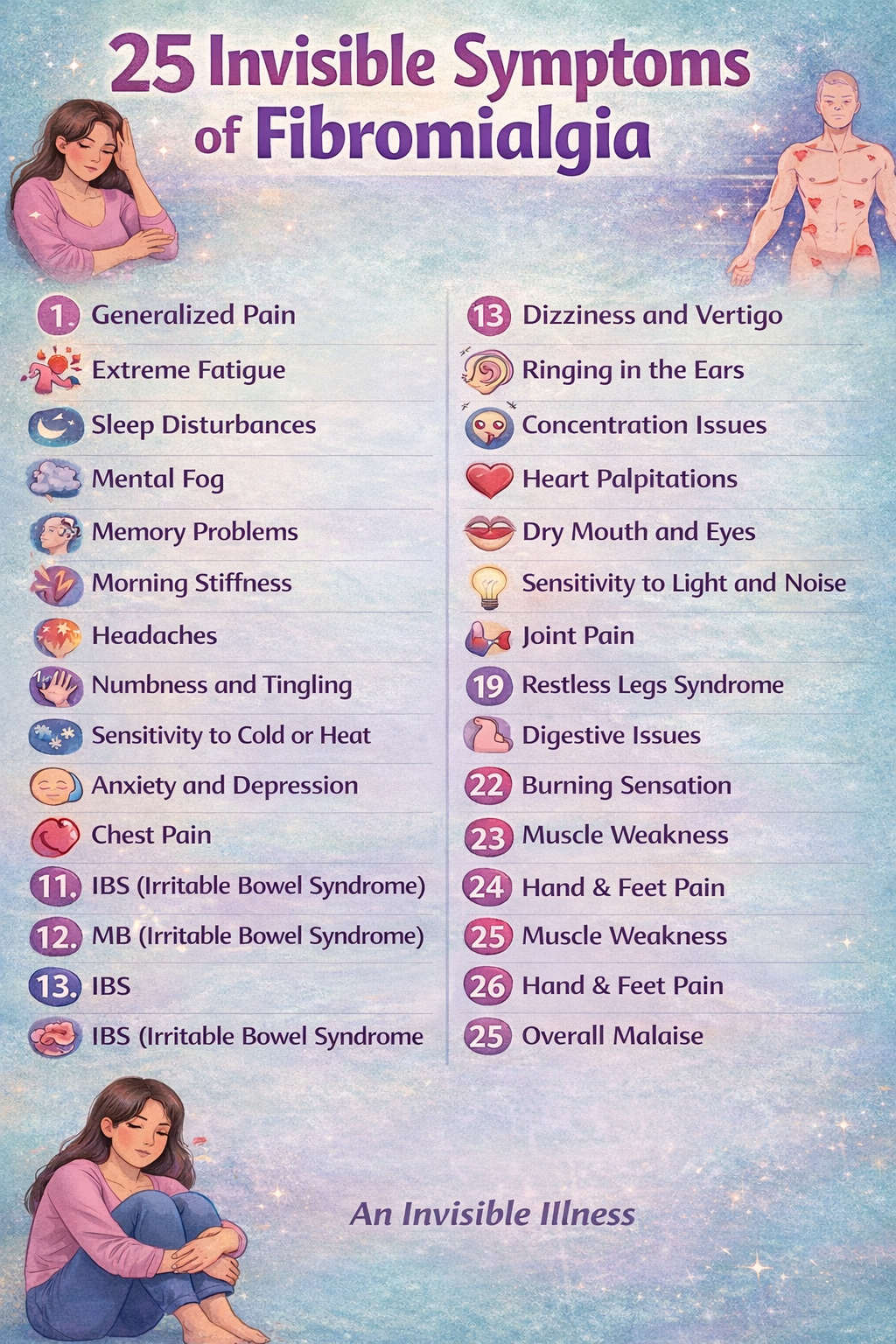
Fibromyalgia is often misunderstood because many of its symptoms cannot be seen from the outside. People living with fibromyalgia may appear “fine,” yet inside their bodies, a constant neurological storm is unfolding. Pain, exhaustion, cognitive struggles, and sensory overload quietly shape everyday life, even when medical tests look normal.
This condition is not imaginary, exaggerated, or psychological weakness. Fibromyalgia is a complex neurological disorder that affects how the brain and nervous system process pain, sensory signals, and stress. Its symptoms fluctuate, overlap, and evolve over time, making diagnosis and daily management particularly challenging.
In this article, we’ll explore 25 invisible symptoms of fibromyalgia, explained one by one, to help patients, caregivers, and readers better understand how deeply this condition affects the body and mind.
Understanding Fibromyalgia Beyond Pain
Fibromyalgia is classified as a central sensitivity syndrome, meaning the nervous system becomes overly reactive. The brain amplifies pain signals, misinterprets normal sensations as threats, and struggles to regulate sleep, mood, digestion, and temperature.
While widespread pain is the most recognized symptom, fibromyalgia impacts multiple body systems, including neurological, muscular, digestive, emotional, and autonomic functions.
Let’s break down the invisible symptoms that define this condition.
1. Widespread Pain
Fibromyalgia pain is diffuse, meaning it spreads across multiple areas of the body rather than staying in one fixed location. It can affect the neck, shoulders, back, hips, arms, and legs simultaneously.
Unlike injury-based pain, fibromyalgia pain has no clear source. It may feel aching, stabbing, throbbing, or deep, and it often shifts from one area to another.
2. Extreme Tiredness
This is not ordinary fatigue. People with fibromyalgia experience persistent exhaustion that does not improve with sleep or rest.
Even small tasks—showering, walking, or thinking—can feel physically draining. This fatigue is neurological in origin and closely tied to disrupted sleep cycles and pain processing.
3. Sleep Disorders
Sleep in fibromyalgia is often light, fragmented, and non-restorative. Frequent awakenings prevent the body from reaching deep, healing sleep stages.
As a result, many patients wake up feeling more tired than when they went to bed, reinforcing the cycle of pain and exhaustion.
4. Mental Fog (Fibro Fog)
Often referred to as “fibro fog,” this symptom involves slowed thinking, confusion, and difficulty organizing thoughts.
People may struggle to follow conversations, process information, or make decisions, especially during pain flares or periods of stress.
5. Memory Issues
Short-term memory problems are common. Patients may forget words mid-sentence, miss appointments, or struggle to recall recent events.
This isn’t dementia—it’s a cognitive overload caused by chronic pain and nervous system fatigue.
6. Morning Rigidity
Many people with fibromyalgia wake up feeling as if their body is “locked.” Muscles and joints may feel stiff, heavy, and painful for hours after waking.
This stiffness improves slowly with gentle movement but can significantly delay daily routines.
7. Headaches and Migraines
Chronic headaches, including migraines and tension headaches, are frequent in fibromyalgia.
These are linked to neurological hypersensitivity, muscle tension, and altered pain perception rather than structural brain issues.
8. Tingling and Numbness
Patients may experience sensations like pins and needles, electric shocks, or numbness in the hands, feet, or face.
Despite feeling nerve-related, these symptoms often occur without detectable nerve damage.
9. Sensitivity to Cold or Heat
Fibromyalgia can disrupt how the body regulates temperature. Mild cold may feel unbearable, while normal heat can trigger exhaustion or pain flares.
This altered thermal perception is related to autonomic nervous system dysfunction.
10. Anxiety and Depression
Mood disorders are common, not because fibromyalgia is “in the mind,” but because chronic pain alters brain chemistry.
Living with persistent discomfort, unpredictability, and limited energy also places emotional strain on patients.
11. Chest Pain
Chest pain in fibromyalgia is often musculoskeletal, involving the muscles and connective tissues of the chest wall.
It can feel alarming and is frequently mistaken for heart problems, leading to anxiety and emergency visits.
12. Irritable Bowel Syndrome (IBS)
Fibromyalgia and IBS frequently coexist. Symptoms include abdominal pain, bloating, diarrhea, constipation, and gas.
This connection reflects heightened sensitivity in the gut’s nervous system.
13. Dizziness and Vertigo
Lightheadedness, imbalance, or a spinning sensation can occur, especially when standing up quickly.
These symptoms are linked to autonomic nervous system irregularities rather than inner ear damage.
14. Ringing in the Ears (Tinnitus)
Persistent ringing, buzzing, or chirping sounds may occur without hearing loss or ear injury.
Neurological hypersensitivity is believed to play a role in tinnitus associated with fibromyalgia.
15. Issues With Concentration
Sustaining focus can be difficult, particularly during mental tasks that require prolonged attention.
Pain competes for cognitive resources, leaving less mental energy for concentration.
16. Palpitations
Some patients feel rapid, irregular, or pounding heartbeats, especially during stress or fatigue.
These sensations are usually linked to nervous system overstimulation rather than heart disease.
17. Dry Mouth and Eyes
Reduced saliva and tear production can cause discomfort, burning, or blurred vision.
This dryness is associated with autonomic dysfunction affecting gland regulation.
18. Sensitivity to Light and Noise
Bright lights, loud sounds, or crowded environments can feel overwhelming or physically painful.
This heightened sensory sensitivity is a hallmark of central nervous system amplification.
19. Aching in the Joints
Joint pain without visible inflammation is common. Unlike arthritis, there is no structural joint damage.
The pain results from amplified pain signals rather than tissue deterioration.
20. Restless Legs Syndrome
An uncontrollable urge to move the legs, especially at night, disrupts sleep and worsens fatigue.
This symptom further contributes to poor sleep quality in fibromyalgia.
21. Digestive Issues
Nausea, reflux, choking sensations, and general gastrointestinal discomfort are frequent complaints.
Digestive symptoms reflect nervous system involvement rather than isolated stomach problems.
22. Burning Sensations
Patients may feel burning in the skin or muscles without external causes.
This symptom is linked to central sensitization and abnormal pain signal processing.
23. Loss of Strength
Muscle weakness may be perceived even without actual muscle loss.
Neuromuscular fatigue and reduced nerve efficiency contribute to this sensation.
24. Cold Hands and Feet
Poor circulation and altered thermal regulation can cause extremities to feel persistently cold.
This symptom may fluctuate depending on stress levels and weather.
25. General Unhappiness and Malaise
Many people describe a constant feeling of heaviness, low energy, and overall discomfort, as if they are always on the verge of getting sick.
This reflects the cumulative burden of chronic symptoms rather than a single emotional cause.
Why Fibromyalgia Is Often Invisible
Medical imaging and blood tests frequently appear normal in fibromyalgia patients. This invisibility leads to misunderstanding, delayed diagnosis, and stigma.
However, modern research confirms that fibromyalgia involves real neurological changes affecting pain perception, sensory processing, and autonomic regulation.
Living With Fibromyalgia: A Whole-Body Condition
Fibromyalgia is not just about pain—it is a systemic condition that affects sleep, mood, digestion, cognition, and sensory experiences.
Recognizing the full range of symptoms is essential for compassionate care, proper treatment, and emotional validation.
Final Thoughts
Fibromyalgia challenges the idea that illness must be visible to be real. Its symptoms may be hidden, but their impact is profound.
By understanding these 25 invisible symptoms, we can foster empathy, reduce stigma, and support those navigating life with this complex condition—one day, one moment, and one symptom at a time.