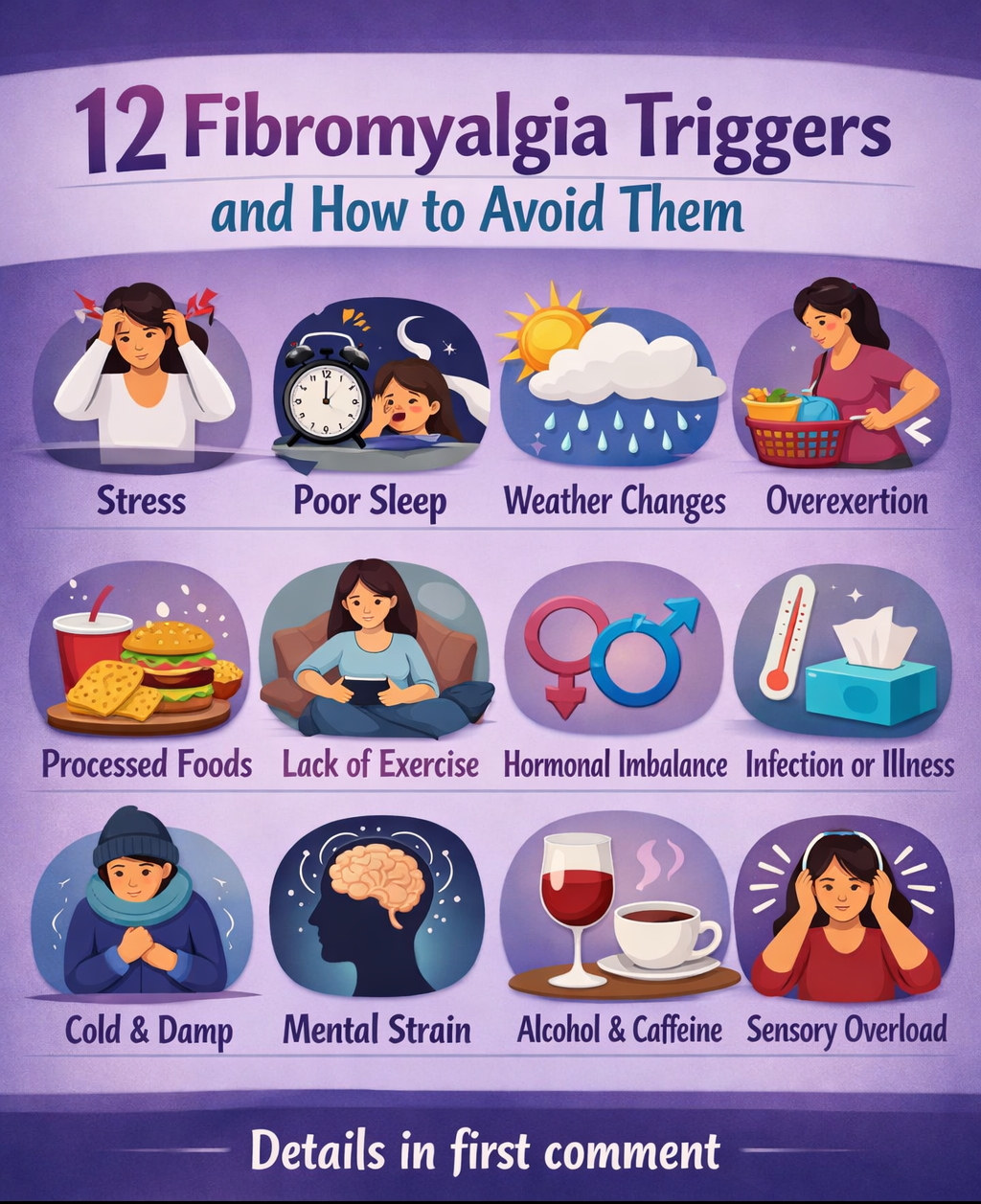
Fibromyalgia is a chronic condition that affects millions of people worldwide. It is commonly associated with widespread pain, fatigue, sleep disturbances, and cognitive difficulties often referred to as “fibro fog.” While the exact cause of fibromyalgia is still not fully understood, researchers agree that certain fibromyalgia triggers can worsen symptoms or cause flare-ups.
Understanding these triggers is one of the most effective ways to manage the condition and improve quality of life. By identifying what aggravates your symptoms and learning how to avoid them, people living with fibromyalgia can significantly reduce pain, fatigue, and discomfort.
In this guide, we will explore 12 common fibromyalgia triggers and practical ways to avoid them, helping you better manage fibromyalgia symptoms and maintain a healthier lifestyle.
Understanding Fibromyalgia and Its Triggers
Fibromyalgia is believed to involve abnormal pain processing in the brain and nervous system. Individuals with this condition often experience heightened sensitivity to pain signals, making even mild stimuli feel intense.
Although symptoms vary from person to person, certain environmental, physical, and emotional factors can trigger symptom flare-ups. These triggers may not affect everyone the same way, but recognizing them is a key step toward effective fibromyalgia management.
Common symptoms associated with fibromyalgia include:
-
Widespread muscle pain
-
Chronic fatigue
-
Sleep disturbances
-
Memory and concentration problems
-
Headaches
-
Sensitivity to temperature, light, or noise
Now let’s look at the 12 most common fibromyalgia triggers and how you can avoid them.
1. Stress
Stress is one of the most common fibromyalgia triggers. Emotional stress can increase muscle tension and heighten pain sensitivity, which often leads to flare-ups.
When stress levels rise, the body releases hormones like cortisol and adrenaline. In people with fibromyalgia, these hormonal changes may intensify pain signals and worsen fatigue.
How to Avoid Stress Triggers
Managing stress is essential for fibromyalgia relief. Consider these strategies:
-
Practice relaxation techniques such as meditation or deep breathing
-
Try yoga or gentle stretching
-
Maintain a balanced daily routine
-
Set realistic expectations and avoid overloading your schedule
-
Consider counseling or therapy if stress becomes overwhelming
Developing healthy stress-management habits can significantly reduce fibromyalgia flare-ups.
2. Poor Sleep
Sleep disturbances are extremely common among people with fibromyalgia. Unfortunately, lack of quality sleep can worsen pain, fatigue, and mental fog, creating a cycle that is difficult to break.
Many individuals with fibromyalgia experience non-restorative sleep, meaning they wake up feeling tired even after several hours of rest.
How to Improve Sleep
Improving sleep hygiene can help reduce symptoms:
-
Maintain a consistent sleep schedule
-
Avoid screens before bedtime
-
Limit caffeine in the evening
-
Create a quiet and comfortable sleeping environment
-
Practice relaxing bedtime routines
Better sleep quality can lead to improved pain management and energy levels.
3. Weather Changes
Many people with fibromyalgia report increased pain during weather changes, particularly when temperatures drop or humidity rises.
Cold, damp conditions may increase muscle stiffness and joint discomfort, making symptoms more noticeable.
How to Manage Weather-Related Pain
While weather cannot be controlled, you can minimize its effects by:
-
Dressing warmly during cold seasons
-
Using heating pads or warm baths
-
Staying physically active indoors
-
Keeping living spaces warm and comfortable
Tracking weather patterns and symptoms may also help you prepare for flare-ups.
4. Overexertion
Physical activity is important for managing fibromyalgia, but overexertion can trigger pain and fatigue.
Doing too much activity in a short period can strain muscles and overwhelm the nervous system.
How to Avoid Overexertion
Balance is key when exercising with fibromyalgia:
-
Pace yourself during physical activities
-
Break tasks into smaller steps
-
Schedule rest periods throughout the day
-
Choose low-impact exercises such as walking, swimming, or stretching
Consistency is more beneficial than intense workouts.
5. Processed Foods
Diet plays a significant role in overall health, and certain foods may worsen fibromyalgia symptoms.
Highly processed foods, refined sugars, and artificial additives can contribute to inflammation, fatigue, and digestive problems.
Healthier Dietary Choices
To support fibromyalgia management:
-
Focus on whole foods such as fruits and vegetables
-
Choose lean proteins and healthy fats
-
Limit processed snacks and sugary beverages
-
Stay hydrated throughout the day
An anti-inflammatory diet may help reduce fibromyalgia symptoms over time.
6. Lack of Exercise
While overexertion can trigger symptoms, lack of exercise can also worsen fibromyalgia pain.
Physical inactivity may lead to muscle stiffness, reduced flexibility, and increased fatigue.
Best Exercises for Fibromyalgia
Gentle and regular exercise can help:
-
Improve blood circulation
-
Reduce muscle tension
-
Enhance mood and sleep quality
Recommended activities include:
-
Walking
-
Swimming
-
Stretching routines
-
Tai Chi
-
Yoga
Even short daily movement sessions can make a noticeable difference.
7. Hormonal Imbalance
Hormonal fluctuations can affect fibromyalgia symptoms, particularly in women. Changes in estrogen levels during menstruation, pregnancy, or menopause may intensify pain and fatigue.
Hormones influence the body’s stress response and pain perception, which can make fibromyalgia symptoms more noticeable.
Managing Hormonal Triggers
While hormonal changes cannot always be prevented, symptom management strategies include:
-
Maintaining a healthy lifestyle
-
Managing stress levels
-
Getting enough sleep
-
Consulting healthcare professionals when symptoms worsen
Medical advice may help address hormone-related symptom flare-ups.
8. Infection or Illness
Illnesses such as the flu, viral infections, or other medical conditions can trigger fibromyalgia flare-ups.
The body’s immune response during illness may increase inflammation and fatigue.
Preventing Illness-Related Flare-Ups
Helpful preventive measures include:
-
Maintaining good hygiene
-
Eating a balanced diet
-
Staying hydrated
-
Getting enough sleep
-
Strengthening the immune system through healthy habits
Taking care of your overall health can reduce the frequency of flare-ups.
9. Cold and Damp Conditions
Cold temperatures and damp environments are known to aggravate fibromyalgia symptoms.
Muscles often become stiff and painful in colder climates, making movement more difficult.
How to Stay Comfortable
Simple strategies can help:
-
Wear warm clothing and layered outfits
-
Use heating blankets or hot showers
-
Keep indoor spaces warm
-
Stretch regularly to maintain flexibility
Warmth can provide relief from muscle stiffness and discomfort.
10. Mental Strain
Mental exhaustion, concentration overload, and emotional stress can worsen fibromyalgia symptoms.
People with fibromyalgia often experience fibro fog, which makes focusing and memory recall more difficult.
Reducing Mental Fatigue
Helpful approaches include:
-
Taking regular breaks during work
-
Practicing mindfulness techniques
-
Prioritizing important tasks
-
Avoiding excessive multitasking
Balancing mental activities with rest can reduce symptom flare-ups.
11. Alcohol and Caffeine
Alcohol and caffeine can interfere with sleep patterns and nervous system regulation.
Excessive caffeine may increase anxiety and disrupt sleep, while alcohol may worsen fatigue and muscle pain.
Moderation Is Important
To manage symptoms:
-
Limit caffeine intake, especially in the evening
-
Reduce alcohol consumption
-
Drink more water throughout the day
Small lifestyle adjustments can improve sleep and energy levels.
12. Sensory Overload
People with fibromyalgia often experience heightened sensitivity to sensory stimuli such as loud noises, bright lights, or strong smells.
This condition, known as sensory overload, can trigger headaches, fatigue, and pain.
Managing Sensory Sensitivity
To reduce sensory stress:
-
Use noise-canceling headphones when needed
-
Avoid bright or flashing lights
-
Take breaks from crowded or noisy environments
-
Create a calm and comfortable home space
Reducing sensory input can help prevent flare-ups.
Tips for Managing Fibromyalgia Flare-Ups
Living with fibromyalgia can be challenging, but understanding triggers allows individuals to take control of their symptoms.
Here are some general strategies that can help:
-
Keep a symptom diary to track triggers
-
Maintain a balanced routine with rest and activity
-
Focus on healthy nutrition and hydration
-
Practice stress-management techniques
-
Work closely with healthcare professionals
Consistency and self-awareness are essential for effective fibromyalgia management.
Final Thoughts
Fibromyalgia is a complex condition, but recognizing fibromyalgia triggers can make a significant difference in managing symptoms.
Stress, poor sleep, weather changes, overexertion, diet, hormonal fluctuations, and sensory overload are among the most common factors that can worsen fibromyalgia pain and fatigue.
By understanding these triggers and implementing practical lifestyle adjustments, individuals with fibromyalgia can reduce flare-ups and improve their overall quality of life.
While there is currently no cure for fibromyalgia, a proactive approach that combines healthy habits, stress management, proper sleep, and balanced activity can help people live fuller and more comfortable lives.